No 275 - Tonari No Totoro (My Neighbour Totoro)
Director - Hayao Miyazaki
How can you fail to like a film that has such infectiously happy title music. (I love the awful awful literal film description in the translated lyrics....). In that clip you will also see the wide grinning face of another genius aspect of the film, but I will touch on THAT later.
This is a film about a family who move next door to a forest spirit. The two little girls in the family then go and have a series of adventures. It sounds like a really childish plot, and it is, but Studio Ghibli can take a simple premise and make it into such a rich experience. This is quite possibly my favourite cartoon ever. Watching it makes me feel so full of joy and full of excitement, it instills childish emotions into adults - which makes it a powerful cartoon.
The film also benefits from the amazing characters. I find Ghibli fascinating because it embraces the ancient mysticism and spirituality of Japan. They create rich stories that are woven in with the myths of their culture. I kind of like a story where ghosts, gremlins, spirits and Gods are just taken to be the norm. However, where Spirited Away expanded it to a phenomenal scope, creating a brief visit to an overwhelming world, here Ghibli lead you through it gently. We only get one spirit and 2 or 3 additional mystical creatures. It means we can still relate to the world a lot more easily. Which is important considering the all out bonkersness of the characters in this film.
Totoro is a giant forest spirit. He looks a bit like a big blue rabbit(ish) and he has a mouth that is roughly the size of his entire head. He could be terrifying as a concept. But he isn't, he is kind and funny and docile. I love that he just seems completely unbothered by what is going on through out the entire film. He is just there.
He is constantly joined by two smaller creatures (Smaller Totoros I presume) who may be children or servants. The middle one certainly looks like a scaled down version of Totoro whilst the smallest is just a white blob with eyes. There is a wonderful subtle silent comedy in the performances of the two small Totoro. Lacking the confidence and size of their larger brethren they seem to sneak around a lot trying desperately to remain unseen and failing, leaving them in a panicky bumbling rush. Bumbling spirits are funny, and a bit weird.
HOWEVER... All of this fades into a tiny speck of normality when compared to the ultimate madness that is Catbus. Catbus is (as you may have guessed) both a cat and a bus. Where oh where and how and why did that combination come together?! It is so utterly, deliciously ridiculous. But so awesome. So awesome. I'm aware I just sound like a spouting fanboy, unable to make coherent sentences byt Catbus is just a fabulously cool concept. Invisible to humans, unless Totoro makes it otherwise, the giant Cat can leap over lakes, balance on telephone cables and bound up trees. All you would feel is a strong wind as it passes.
It is so delightfully bonkers, that it makes the film. Catbus is (in my opinion) the definite highlight of Miyazaki's amazing career. Possibly my favourite animated creation full stop. Stick Gaston in a Catbus and THAT is the pinnacle of animation.
Amongst the madness of the otherworldly characters, it is important for you to have a human anchor. Luckily the Kusakabe family are written with the same care and invention used for their fantastical characters. The family have a fascinating dynamic, and the viewer warms to them, what I like is that so much of their life is left unexplained.
A key element to the story is that the mum is in hospital. It is never explained why, but it does mean that the central trio of dad and the two daughters are closer, tighter, and work together, to better things for their mother.
This is what is most impressive, the relationship and characterisation of the humans. Namely the youngest daughter, Mei. She is fabulous and behaves like a proper genuine child. From her adoration and near hero worship of her older sister Satsuki to her most delightful trait - the fact that she can't seem to handle more than one emotion at a time. So Mei will quickly go from elated joy to a temper tantrum (here... in CGI for some reason). Which I think is what most toddlers are like.
The characters are rich and feel real so when Mei goes missing, running off to see her mother, you really feel for the characters. Especially as Studio Ghibli aren't afraid of killing off children (in their FILMS, not in a weird sacrificial manner), you generally feel that anything could happen to Mei.
However, there is a happy ending and the family are reunited thanks to Totoro's magic (which includes at one point... being able to fly on a magic Dreidel... whats that all about?!).
What I like about this truly heartwatrming story is the pace. It is such a slow film, plodding along allowing us to live life with the characters and settle into their ways. There is no real big drama (except for Mei running away), just a lot of set pieces in which not much happens. Yet despite all that it still tells its story in under 90 minutes.
It it not only a great cartoon and a great work of imagination. It is a brilliant piece of story telling
Friday, 15 January 2010


Hell, the only one thing I ever been good for is lovin'. Women go crazy for me, that's a really true fact!
No 307 - Midnight Cowboy
Director - John Schlesinger
This is a very odd little film. I'm not sure I can easily explain what it is about, but it features Joe Buck, a very naive and equally full of himself Texan who moves to New York in order to become a man ho, a male gigolo. However, it is not an easy job and he finds himself poorer and poorer with less and less to own.
As he becomes more cynical and more impoverished, he is taken in and looked after by Rizzo, a sickly thief and reprobate. Together they squat in condemned building and try desperately to get by. As you may be able to tell, this isn't the jolliest of films.
I do really like the initial Joe Buck. When we meet him in Texas, he is full of life and pep and vigour. He is proud of the way he looks, he wears beautifully flamboyant shirts and dresses like an old school cowboy. He is chivalrous, kind and just so bloody happy about everything. He really is an adorable character. The kindness and the optimism balances out the arrogance which also runs through him. However, as the world weary cynicism of New York starts to wear him down, all we are left with is his arrogance. Which isn't quite as nice when he isn't a ridiculously happy Texan.
He spends his time bad mouthing and belittling Rizzo, slagging him off as well as threatening violence. There is an interesting undercurrent of violence running through Joe. On several occasions he manages to stop himself just before doing something dangerous. But at one point he attacks a man and potentially kills him (the scene is left unclear). He just becomes a far less likable character, whereas Rizzo begins the film as a sleazy slimy horrible thief and con artist and gradually gets more likable.
It helps that Rizzo is played by Dustin Hoffman, who I think is an amazing actor and just a fabulously funny person (from what I've seen). He manages to give Rizzo the right mix of emotions. He is a streetwise manipulator of people but he is also very sick and his squalid living conditions mean he is just getting sicker.
You realise that despite the tempestuous relationship between the two men, they need each other to survive. It is this weird relationship, best friends who hate each other, which spurs the film on.
Despite the fairly simple buddy element , the film does some really bizarre things in its presentation. There are a lot of flashback scenes which are grainy and obscure and cut in a way that means nothing really makes sense. You just get flashing images of Joe's past but you can see that it involves a lot of violence and a strange relationship with his first girlfriend. Whilst the flashbacks show quite a scary tale of passion and obsession, the script only addresses it once.
Women go crazy for me, that's a really true fact! Ratso, hell! Crazy Annie they had to send her away!
You realise that really Joe is escaping something. The way he dresses, and the ideals of the old west help him to escape from his modern life and his moving to New York helps him escape Texas. He has no luck in New York and instead he meets somebody who is also trying to escape. From New York.
So together they go to Miami.
It is only when they reach Florida that Joe becomes comfortable, he ditches his Cowboy outfit and relaxes.. Happy. Yet that happiness doesn't last long and the film's final moment is so tragic (yet obvious and unavoidable from about halfway through the film) that it leaves you on a massive low.
As shocked and upset as the characters in the film.
Director - John Schlesinger
This is a very odd little film. I'm not sure I can easily explain what it is about, but it features Joe Buck, a very naive and equally full of himself Texan who moves to New York in order to become a man ho, a male gigolo. However, it is not an easy job and he finds himself poorer and poorer with less and less to own.
As he becomes more cynical and more impoverished, he is taken in and looked after by Rizzo, a sickly thief and reprobate. Together they squat in condemned building and try desperately to get by. As you may be able to tell, this isn't the jolliest of films.
I do really like the initial Joe Buck. When we meet him in Texas, he is full of life and pep and vigour. He is proud of the way he looks, he wears beautifully flamboyant shirts and dresses like an old school cowboy. He is chivalrous, kind and just so bloody happy about everything. He really is an adorable character. The kindness and the optimism balances out the arrogance which also runs through him. However, as the world weary cynicism of New York starts to wear him down, all we are left with is his arrogance. Which isn't quite as nice when he isn't a ridiculously happy Texan.

He spends his time bad mouthing and belittling Rizzo, slagging him off as well as threatening violence. There is an interesting undercurrent of violence running through Joe. On several occasions he manages to stop himself just before doing something dangerous. But at one point he attacks a man and potentially kills him (the scene is left unclear). He just becomes a far less likable character, whereas Rizzo begins the film as a sleazy slimy horrible thief and con artist and gradually gets more likable.
It helps that Rizzo is played by Dustin Hoffman, who I think is an amazing actor and just a fabulously funny person (from what I've seen). He manages to give Rizzo the right mix of emotions. He is a streetwise manipulator of people but he is also very sick and his squalid living conditions mean he is just getting sicker.
You realise that despite the tempestuous relationship between the two men, they need each other to survive. It is this weird relationship, best friends who hate each other, which spurs the film on.
Despite the fairly simple buddy element , the film does some really bizarre things in its presentation. There are a lot of flashback scenes which are grainy and obscure and cut in a way that means nothing really makes sense. You just get flashing images of Joe's past but you can see that it involves a lot of violence and a strange relationship with his first girlfriend. Whilst the flashbacks show quite a scary tale of passion and obsession, the script only addresses it once.
Women go crazy for me, that's a really true fact! Ratso, hell! Crazy Annie they had to send her away!
You realise that really Joe is escaping something. The way he dresses, and the ideals of the old west help him to escape from his modern life and his moving to New York helps him escape Texas. He has no luck in New York and instead he meets somebody who is also trying to escape. From New York.
So together they go to Miami.
It is only when they reach Florida that Joe becomes comfortable, he ditches his Cowboy outfit and relaxes.. Happy. Yet that happiness doesn't last long and the film's final moment is so tragic (yet obvious and unavoidable from about halfway through the film) that it leaves you on a massive low.
As shocked and upset as the characters in the film.
Sunday, 10 January 2010
As long as there's, you know, sex and drugs, I can do without the rock and roll.
No 48 - This is Spinal Tap
Director - Rob Reiner
Spinal Tap is always going to be an important film, in that it brought us really great, influential, iconic comedy that was improvised. The improvisation thing is what is really impressive, because like Anchorman (another moment of improvisatory genius), this film is so utterly quotable. It makes you wonder how committees who are meticulously writing scripts can fail to get the zest and the laughter than some people can just invent on the spot. The acting is also brilliant, creating fabulous performances which deliver these amazing moments in a brilliantly subtle and understated way. It makes the film believable as an (albeit ridiculous) actual 'rockumentary'. However, before I go on to talk about some of the performances from comedy greats in this film, I want to begin by talking about Rob Reiner's role as fake documentary (and advert) director Marty DiBergi. For most of the film it is fairly understated, asking questions and sagely nodding as the band riffs around him. I imagine that for most of his time on screen, his biggest challenge was to keep a straight face when confronted with the insane improvisation. But his biggest triumph is his introduction. The fabulous level of awkward arrogance on display as Marty DiBergi talks about his film. My favourite bit being where he goes to cross his arms and instantly changes his mind, abandoning mid-cross.
Now it might be that Rob Reiner is genuinely uncomfortable in an acting role, but I think it is just a wonderful little performance.
As soon as the film starts though we are left to the mercy of the Tap. This is where Christopher Guest's Nigel Tufnel and Michael McKean's David St Hubbins shine as the driving force of Spinal Tap. However, there is also the excellent Harry Shearer as Derek Smalls, who whilst being a fairly background member of the band (though still in the all important central trio) has a lot of the best comic moments.
"You can't dust for vomit" he says at one point to describe one of the (many, many) unfortunate deaths of Spinal Tap drummers. Or the fabulous moment where he has to remove a foil covered cucumber from his pants when going through a metal detector. Or the point where he is trapped in his pod for the duration of the set. He is even the guy that utters the immortal "Hello Cleveland" in one of the film's greatest comedy moments.
This is the problem with this blog, I don't want to just sit there and list the film's iconic moments. But there are so many that deserve mention. Personal favourites are the Tiny Stone Henge and almost all of Nigel's little moments that he shares with the director. When left on his own you see how petulant and stupid he can be.
From his sulk about the size of the bread in his dressing room, through to his beautiful piano piece (excellently titled 'Lick My Love Pump') - seen here performed by a sprightly (and somewhat annoying) person.
However Nigel's shining moment is when guiding Marty through his guitar collection. Each ridiculous anecdote about the guitars leading up to Spinal Tap's most famous moment "This goes up to 11".
Rumour has it that Marshall released an amp that went up to 11, in tribute to the film. So Christopher Guest had a new on made, that went up to infinity. These little moments of arrogance are what makes the film so brilliant, it is what makes the humour so much cleverer than Anchorman. For the world of Anchorman is stupid. The whole thing is stupid. Here the world is real, there is a surprising level of realism in the way that society treats the rockstars who are starting to fade out. Protecting them from the cruel outside world.
This just helps to build Spinal Tap out as a bunch of very naive idiots, who are struggling with their own inadequacies.
This struggle becomes all the more evident when the film's surprisingly serious 'Yoko Ono' subplot creates a rift between David and Nigel. Because for all the talk of the band, for all the (truly fabulous and at times balls out genius) songs, for all the spectacle this is a film about a really long friendship and the rivalry and turbulence which is part of it.
And I don't know what else I can say about this. Just that it is very funny, but doesn't thrust it at you... and at the end, it is very moving.
Director - Rob Reiner
Spinal Tap is always going to be an important film, in that it brought us really great, influential, iconic comedy that was improvised. The improvisation thing is what is really impressive, because like Anchorman (another moment of improvisatory genius), this film is so utterly quotable. It makes you wonder how committees who are meticulously writing scripts can fail to get the zest and the laughter than some people can just invent on the spot. The acting is also brilliant, creating fabulous performances which deliver these amazing moments in a brilliantly subtle and understated way. It makes the film believable as an (albeit ridiculous) actual 'rockumentary'. However, before I go on to talk about some of the performances from comedy greats in this film, I want to begin by talking about Rob Reiner's role as fake documentary (and advert) director Marty DiBergi. For most of the film it is fairly understated, asking questions and sagely nodding as the band riffs around him. I imagine that for most of his time on screen, his biggest challenge was to keep a straight face when confronted with the insane improvisation. But his biggest triumph is his introduction. The fabulous level of awkward arrogance on display as Marty DiBergi talks about his film. My favourite bit being where he goes to cross his arms and instantly changes his mind, abandoning mid-cross.

Now it might be that Rob Reiner is genuinely uncomfortable in an acting role, but I think it is just a wonderful little performance.
As soon as the film starts though we are left to the mercy of the Tap. This is where Christopher Guest's Nigel Tufnel and Michael McKean's David St Hubbins shine as the driving force of Spinal Tap. However, there is also the excellent Harry Shearer as Derek Smalls, who whilst being a fairly background member of the band (though still in the all important central trio) has a lot of the best comic moments.


"You can't dust for vomit" he says at one point to describe one of the (many, many) unfortunate deaths of Spinal Tap drummers. Or the fabulous moment where he has to remove a foil covered cucumber from his pants when going through a metal detector. Or the point where he is trapped in his pod for the duration of the set. He is even the guy that utters the immortal "Hello Cleveland" in one of the film's greatest comedy moments.
This is the problem with this blog, I don't want to just sit there and list the film's iconic moments. But there are so many that deserve mention. Personal favourites are the Tiny Stone Henge and almost all of Nigel's little moments that he shares with the director. When left on his own you see how petulant and stupid he can be.
From his sulk about the size of the bread in his dressing room, through to his beautiful piano piece (excellently titled 'Lick My Love Pump') - seen here performed by a sprightly (and somewhat annoying) person.
However Nigel's shining moment is when guiding Marty through his guitar collection. Each ridiculous anecdote about the guitars leading up to Spinal Tap's most famous moment "This goes up to 11".
Rumour has it that Marshall released an amp that went up to 11, in tribute to the film. So Christopher Guest had a new on made, that went up to infinity. These little moments of arrogance are what makes the film so brilliant, it is what makes the humour so much cleverer than Anchorman. For the world of Anchorman is stupid. The whole thing is stupid. Here the world is real, there is a surprising level of realism in the way that society treats the rockstars who are starting to fade out. Protecting them from the cruel outside world.
This just helps to build Spinal Tap out as a bunch of very naive idiots, who are struggling with their own inadequacies.
This struggle becomes all the more evident when the film's surprisingly serious 'Yoko Ono' subplot creates a rift between David and Nigel. Because for all the talk of the band, for all the (truly fabulous and at times balls out genius) songs, for all the spectacle this is a film about a really long friendship and the rivalry and turbulence which is part of it.
And I don't know what else I can say about this. Just that it is very funny, but doesn't thrust it at you... and at the end, it is very moving.
Saturday, 9 January 2010
Don't let yourself get attached to anything you are not willing to walk out on in 30 seconds flat if you feel the heat around the corner.
No 38 - Heat
Director - Michael Mann
This film got a lot of press and a lot of attention because it finally joined two great actors together. Robert DeNiro and Al Pacino. It is amazing to think that they had never acted together. Specially as they're both Italio-American actors from the same generation. Hell, they've even been in the same trilogy together.
And yet it wasn't until 1995 that the two of them got to share a scene together. What surprises me though is the sheer number of big(gish) names also appear in this film. People like a young Natalie Portman, the outstanding and unspeakably badass Danny Trejo (playing a character with the original name of Trejo), Hank Azaria in non-comedy form, John Voight in strange old hippy form and Val Kilmer.
This is great because whilst the film follows two fabulous actors it is filled with bit parts and supporting roles from equally talented actors. Natalie Portman gives the kind of edgy and real performance we know she was able to do even as a child, Danny Trejo is superb, his scenes (When he is occasionally put into the forefront) are incredibly poignant for someone who had such a crazy journey before becoming an actor, John Voight and Hank Azaria both have charm and acting chops needed to realistically convey their small roles.
The person to talk about though is Val Kilmer, I really like Val Kilmer, despite his indiscretions. I hoped that Gay Perry was the role to bring him back to the forefront, but I'm always happy to see him in a film. His role in here is brilliant, bringing pathos and a likable side into this arrogant and annoying gambling addict. The relationship between him and his wife is a wonderful little subplot to the movie's mains story....
The story itself is fairly simple. We have a bunch of criminals who are performing large scale heists. They are lead by DeNiro's character. We then have the FBI agents tracking them down, led by Pacino.
But, we want the story to be simple. This isn't a film filled with twists and turns... this is a simple structure on which to hang some truly excellent acting. This is a film where the joy comes from watching some fabulous performances. Whilst both are excellent actors, I have to say that it is DeNiro's performance which shines in Heat. Al Pacino seems to fluctuate between being very quiet and VERY LOUD. He has a manic disjointed delivery which I found off putting. It works when he wants to freak out criminals and get them to play along, because it is off putting. But for the rest of the film I find it a bit weird.
On the other hand, DeNiro is terrifying. His role as a leader of a criminal gang is perfect. The way that his calm and quiet composure masks an very present undercurrent of bristling violence. See how he reprimands Waingro for messing up the job. His calm composure cracking for a moment of terrifying physical force.
DeNiro is not a man I'd ever want to piss off, and he plays these violent horrible characters with such ease and such comfort. It is good to see DeNiro comfortable in a role rather than that weird awkward vibe he tends to give off when performing comedy.
However he also manages the nicer elements of Neil's character. The way he turns from angry tense suspicion to a really open and friendly charming flirt with Amy Brenneman's delightful Eady. The two of them share a really nice relationship, however as this blog's title shows Neil is not someone to settle down. So you know throughout that there is a strong chance she will get hurt.
It feels unfair to just dismiss Pacino, he is amazing, he just doesn't shine with the same elegance as DeNiro. However, for every scene where he is an annoying shouty copper there are some beautiful scenes with his family. Showing the stress and strain that such responsibility has on the people he loves. For a really powerful moment, possibly the most powerful moment in the whole film, look how he reacts when he finds his step daughter in grave peril (Spoiler clicky...). That moment of tender beauty as he cares for his stepdaughter and the panic and understanding that happens afterwards. It is beautifully understated, sensitive and moving. Considering that so much of Pacino's performance seems to be built on manic shouting, it is nice to see him being understated.
Pacino's other strongest scene is when he finally meets with DeNiro's character in a beautifully calm cafe conversation. The entire scene bristles with the undercurrent of danger and yet is so calm. Considering it is a scene which shows very little emotion and no movement at all, it crackles with energy and with chemistry. It is the pleasing resolution of 90 minutes of being teased. When they two great actors finally meet up it is a masterclass of the subtle and understated performance.
It is just a shame that the second time they meet up is for the all important 'grand finale'. Despite there being what feels like a grand finale about 80 minutes in to the film (with explosions and gun fire.... lots and lots of gunfire) the film ends with the typical duel and shootout which has to occur in these kind of chase films.
It is a shame because this film is all about The Chase. It is about how the chase affects the lives of those involved, how it becomes and obsession. It is about the thrill of the danger of the heat of pursuit.
To try and resolve something like that just seems a bit like a waste
Director - Michael Mann
This film got a lot of press and a lot of attention because it finally joined two great actors together. Robert DeNiro and Al Pacino. It is amazing to think that they had never acted together. Specially as they're both Italio-American actors from the same generation. Hell, they've even been in the same trilogy together.
And yet it wasn't until 1995 that the two of them got to share a scene together. What surprises me though is the sheer number of big(gish) names also appear in this film. People like a young Natalie Portman, the outstanding and unspeakably badass Danny Trejo (playing a character with the original name of Trejo), Hank Azaria in non-comedy form, John Voight in strange old hippy form and Val Kilmer.


This is great because whilst the film follows two fabulous actors it is filled with bit parts and supporting roles from equally talented actors. Natalie Portman gives the kind of edgy and real performance we know she was able to do even as a child, Danny Trejo is superb, his scenes (When he is occasionally put into the forefront) are incredibly poignant for someone who had such a crazy journey before becoming an actor, John Voight and Hank Azaria both have charm and acting chops needed to realistically convey their small roles.

The person to talk about though is Val Kilmer, I really like Val Kilmer, despite his indiscretions. I hoped that Gay Perry was the role to bring him back to the forefront, but I'm always happy to see him in a film. His role in here is brilliant, bringing pathos and a likable side into this arrogant and annoying gambling addict. The relationship between him and his wife is a wonderful little subplot to the movie's mains story....

The story itself is fairly simple. We have a bunch of criminals who are performing large scale heists. They are lead by DeNiro's character. We then have the FBI agents tracking them down, led by Pacino.
But, we want the story to be simple. This isn't a film filled with twists and turns... this is a simple structure on which to hang some truly excellent acting. This is a film where the joy comes from watching some fabulous performances. Whilst both are excellent actors, I have to say that it is DeNiro's performance which shines in Heat. Al Pacino seems to fluctuate between being very quiet and VERY LOUD. He has a manic disjointed delivery which I found off putting. It works when he wants to freak out criminals and get them to play along, because it is off putting. But for the rest of the film I find it a bit weird.
On the other hand, DeNiro is terrifying. His role as a leader of a criminal gang is perfect. The way that his calm and quiet composure masks an very present undercurrent of bristling violence. See how he reprimands Waingro for messing up the job. His calm composure cracking for a moment of terrifying physical force.
DeNiro is not a man I'd ever want to piss off, and he plays these violent horrible characters with such ease and such comfort. It is good to see DeNiro comfortable in a role rather than that weird awkward vibe he tends to give off when performing comedy.
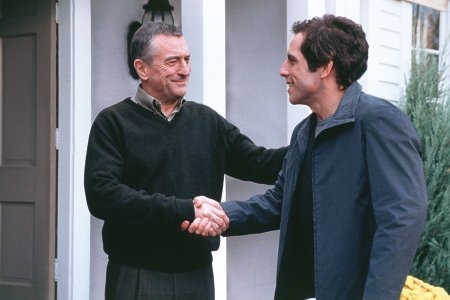
However he also manages the nicer elements of Neil's character. The way he turns from angry tense suspicion to a really open and friendly charming flirt with Amy Brenneman's delightful Eady. The two of them share a really nice relationship, however as this blog's title shows Neil is not someone to settle down. So you know throughout that there is a strong chance she will get hurt.
It feels unfair to just dismiss Pacino, he is amazing, he just doesn't shine with the same elegance as DeNiro. However, for every scene where he is an annoying shouty copper there are some beautiful scenes with his family. Showing the stress and strain that such responsibility has on the people he loves. For a really powerful moment, possibly the most powerful moment in the whole film, look how he reacts when he finds his step daughter in grave peril (Spoiler clicky...). That moment of tender beauty as he cares for his stepdaughter and the panic and understanding that happens afterwards. It is beautifully understated, sensitive and moving. Considering that so much of Pacino's performance seems to be built on manic shouting, it is nice to see him being understated.

Pacino's other strongest scene is when he finally meets with DeNiro's character in a beautifully calm cafe conversation. The entire scene bristles with the undercurrent of danger and yet is so calm. Considering it is a scene which shows very little emotion and no movement at all, it crackles with energy and with chemistry. It is the pleasing resolution of 90 minutes of being teased. When they two great actors finally meet up it is a masterclass of the subtle and understated performance.
It is just a shame that the second time they meet up is for the all important 'grand finale'. Despite there being what feels like a grand finale about 80 minutes in to the film (with explosions and gun fire.... lots and lots of gunfire) the film ends with the typical duel and shootout which has to occur in these kind of chase films.
It is a shame because this film is all about The Chase. It is about how the chase affects the lives of those involved, how it becomes and obsession. It is about the thrill of the danger of the heat of pursuit.
To try and resolve something like that just seems a bit like a waste
Thursday, 7 January 2010
November 23rd, 1966 was the most important day of their lives.
No 414 - La double vie de Véronique (The Double Life of Veronique)
Director - Krzysztof Kieslowski
Another film which I knew nothing about, I didn't even realise, until near the end, that the second language in this film is Polish. But that is all the better because to know too much about this film ruins the beauty.
The film begins by cutting between two identical children, one in Poland and one in France - we then cut back to Poland and are introduced to Weronika, the first protagonist of the film, played by the beautiful and delightful Irene Jacob. What I love is that in one simple scene, we are given all the information about her we could possibly need. As her choir practise is called short because of the weather we see her finish her Soprano solo with a look of joy on her face, drenched in the torrential rain.
Weronika is full of life, and full of love. She is also very cheeky, but in a nice way... we see her run from the rain, bump into her lover and lead him straight to her room.
The film of Weronika's life doesn't have much of a story, it begins by following her around and only develops a plot when she is offered the chance to audition for a huge concert, and for someone who may be a massively famous composer, but I thought he was Christopher from Eggheads. Now, I don't want it to feel like I'm giving massive spoilers away... after all, there is a clue in the title - but the film really gets interesting when Weronika is walking home from her audition and she stumbles upon a Coach trip including Veronique (also, played by Jacob), her confusion over the moment is beautifully over looked and then she continues her life.
What I like about Weronika's story is that it has this charm and this innocence which is a delight to watch. It feels a lot like Amelie and indeed Weronika herself feels a lot like Tatou's Amelie. They both combine the wide innocence with a sense of mischief and they both have little quirks which are seen throughout the film. Weronika's adorable optimism is highlighted even more because whereas Amelie lives in a prettified, fantasy Paris, Weronika lives in Krakow during the fall of Communism. We see riots, we see protests, we see police barricades and yet throughout it all we are transfixed by Weronika who sees the beauty and the humour in the situation, be it singing a soprano part to a male voice choir, or an elderly flasher walking past, Weronika's life will make you smile.
Weronika's story ends with her performance for Chris from Eggheads, at a full theatre she performs the most important solo of her life.
At this point I do want to discuss the music in the film, because there is some truly beautiful music used throughout Weronika's story, focusing on amazing choral pieces due to Weronika's role as a soprano. Her grand show piece is particularly beautiful - Concerto En Mi Mineur by Preisner. I have never heard of this song, nor indeed of Preisner, showing that either he is quite elusive and underground. Or that I am an uncultured slob.
(actually... I found out that Preisner is a film score composer and he invented a fake 18th century composer in order to write classical music and accredit to him within films... so now I don't feel too bad).
With Weronika's story finished in this film, we cross over to France and meet Veronique. Both characters are introduced to us whilst having sex (or just before having sex) and then we follow her through her life.
This is where the film gets a bit strange because there appear to be psychic nods between Veronique and Weronika. For example, Veronique has just discovered the work of Van Den Budenmayer (Preisner's fictional composer) and is teaching her class of children to play an orchestral version of Concerto En Mi Mineur.
Despite Veronique being a far more serious and hard nosed character than the more fun loving Weronika, the film is far more whimsical and fairytale. Veronique becomes obsessed with a puppeteer who performs at the school she teaches at. The puppeteer becomes equally obsessed and begins to drop little hints and clues. Veronique turns detective and finds out more about the puppeteer.
He is a story teller and he is waiting for her at a French Cafe.
Finally the two meet and fall in love (which is never really in doubt) and the film ends. None of the story is a surprise but it is a delightful little tale.
The thing is it never touches on the mystery behind the film, despite there being several opportunities where it becomes the topic of conversation.
Director - Krzysztof Kieslowski
Another film which I knew nothing about, I didn't even realise, until near the end, that the second language in this film is Polish. But that is all the better because to know too much about this film ruins the beauty.
The film begins by cutting between two identical children, one in Poland and one in France - we then cut back to Poland and are introduced to Weronika, the first protagonist of the film, played by the beautiful and delightful Irene Jacob. What I love is that in one simple scene, we are given all the information about her we could possibly need. As her choir practise is called short because of the weather we see her finish her Soprano solo with a look of joy on her face, drenched in the torrential rain.

Weronika is full of life, and full of love. She is also very cheeky, but in a nice way... we see her run from the rain, bump into her lover and lead him straight to her room.
The film of Weronika's life doesn't have much of a story, it begins by following her around and only develops a plot when she is offered the chance to audition for a huge concert, and for someone who may be a massively famous composer, but I thought he was Christopher from Eggheads. Now, I don't want it to feel like I'm giving massive spoilers away... after all, there is a clue in the title - but the film really gets interesting when Weronika is walking home from her audition and she stumbles upon a Coach trip including Veronique (also, played by Jacob), her confusion over the moment is beautifully over looked and then she continues her life.
What I like about Weronika's story is that it has this charm and this innocence which is a delight to watch. It feels a lot like Amelie and indeed Weronika herself feels a lot like Tatou's Amelie. They both combine the wide innocence with a sense of mischief and they both have little quirks which are seen throughout the film. Weronika's adorable optimism is highlighted even more because whereas Amelie lives in a prettified, fantasy Paris, Weronika lives in Krakow during the fall of Communism. We see riots, we see protests, we see police barricades and yet throughout it all we are transfixed by Weronika who sees the beauty and the humour in the situation, be it singing a soprano part to a male voice choir, or an elderly flasher walking past, Weronika's life will make you smile.
Weronika's story ends with her performance for Chris from Eggheads, at a full theatre she performs the most important solo of her life.
At this point I do want to discuss the music in the film, because there is some truly beautiful music used throughout Weronika's story, focusing on amazing choral pieces due to Weronika's role as a soprano. Her grand show piece is particularly beautiful - Concerto En Mi Mineur by Preisner. I have never heard of this song, nor indeed of Preisner, showing that either he is quite elusive and underground. Or that I am an uncultured slob.
(actually... I found out that Preisner is a film score composer and he invented a fake 18th century composer in order to write classical music and accredit to him within films... so now I don't feel too bad).
With Weronika's story finished in this film, we cross over to France and meet Veronique. Both characters are introduced to us whilst having sex (or just before having sex) and then we follow her through her life.
This is where the film gets a bit strange because there appear to be psychic nods between Veronique and Weronika. For example, Veronique has just discovered the work of Van Den Budenmayer (Preisner's fictional composer) and is teaching her class of children to play an orchestral version of Concerto En Mi Mineur.
Despite Veronique being a far more serious and hard nosed character than the more fun loving Weronika, the film is far more whimsical and fairytale. Veronique becomes obsessed with a puppeteer who performs at the school she teaches at. The puppeteer becomes equally obsessed and begins to drop little hints and clues. Veronique turns detective and finds out more about the puppeteer.
He is a story teller and he is waiting for her at a French Cafe.
Finally the two meet and fall in love (which is never really in doubt) and the film ends. None of the story is a surprise but it is a delightful little tale.
The thing is it never touches on the mystery behind the film, despite there being several opportunities where it becomes the topic of conversation.
- Weronika spots Veronique in the coach group travelling round Krakow
- A member of the audience at Weronika's concert sees Veronique at a train station.
- Veronique develops her photos of Krakow and sees the picture of Weronika in Krakow
However, the important thing is that none of the film's cast are any wiser than the viewer. So we don't get a divine moment of explanation, we only get moments of confusion with the characters, seeing something they don't understand.
The only exception to this is the puppeteer who begins to tell a story with two identical puppets of Veronique.
November 23rd, 1966 was the most important day of their lives. That day, at three in the morning, they were both born in two different cities, on two different continents. They both had dark hair and brownish-green eyes. When they were both two years old and already knew how to walk, one of them burnt her hand on a stove. A few days later, the other reached out to touch the stove but pulled away just in time and yet, she could not have known she was just about to burn herself.
If the story reflects the film, they couldn't be identical twins. Instead the film plays with duality and identity. But is wise enough never to give a definitive answer.
A beautiful film which manages to tell a wonderfully elegant and simple story (or pair of stories) in a complex and metaphysical framework.
Sunday, 3 January 2010
Let me make something clear to you. He doesn't have a name. He has a program. He's product
No 404 - Robocop
Director - Paul Verhoeven
Staying in the police genre we can still move to this, the polar opposite to The Usual Suspects. From the very first scene (hell the first 30seconds) you can see that Robocop has not aged well. The from the tone to the visuals, the dialogue through to the fashion. This film is so rooted in the 80s. It could not be any more 80s if it tried.
Luckily, Robocop is also ridiculous. Completely stupid, in a Highlander kind of way and very enjoyable... so you allow the rubbishness, as it kind of adds to the enjoyable stupidity
The film is set in a ridiculously violent world. Where the average purse snatcher will blow your head off with a shotgun BEFORE robbing you. It is a world where the police are allowed to machine gun you to death as part of being 'authorised to use force'.
It is also a world where one VERY corrupt organisation is able to control everything - from the military to pharmaceuticals to everything.
But please, don't let the politics bog you down too much... this is, after all, a Verhoeven film. So, as we're introduced to Murphy, the newest recruit to the Detroit Police, we get a typical walk through the co-ed showers.... allowing for some typically Verhoeven nudity. Murphy then lasts less than one mission before he is shotgunned into multiple bloody pieces. After all, why work on characterisation when we can have messy ridiculous violence? Whilst that may sound like criticism, in the context of THIS universe, it really works.
Left as only a bloody carcass... Murphy's partner (the really quite sweet Officer LEwis, played by Nancy Allen) drags him to hospital where he dies and is snatched up by the dubious mega company for part of their Robocop program.
And so we get Robocop. The big clunking monotone ultra-police man. He packs some serious firepower and he has some pretty damned awesome skills when it comes to being unstoppable. He goes and stops some crimes, after all, that is what he has been programmed with (his 3 objectives and mysterious 4th - if you want a 4th objective that Robocop can't see, just program it so HE CAN'T SEE IT.... not so that it flashes 'confidential' over his point of view.). However he falls across the gang which killed him. A gang which is led by Red from That 70's show and includes The Devil from Reaper as well as a cliche jive talking sassy black man and some other people. A pretty good 80's gang all things considered.
This gives him flashbacks and painful memories and he goes out to get his revenge and kill the gang.
Most of the film is therefore a very slow chase (Robocop is persistent, but he aint the fastest bugger) with an AWFUL LOT of bullets being fired everywhere. Like seriously, everywhere! It seems that the bad guys don't realise that Robocop is pretty much (though not entirely) bullet proof. They just keep trying to shoot him and he just keeps going up to them and killing them.
I particularly like the death bu HUGE vat of toxic waste, which mutates a baddie who then explodes into a gooey mess when hit by a car... a lot of fun.
The story builds up with more ludicrous nonsense allowing us to have a fight between Robocop and the real impressive feat of tech in this film.... the ED-209. The robotic police alternative to Robocop is a pretty badass piece of kit and an AMAZING piece of stop motion animation (I do love a good piece of stop motion). However it was not designed to go down stairs. Maybe Old Detroit is perfectly flat, we'll never know......
So yes, whilst the film toys with the ideas of identity and self, it never tries to get very deep. What we have his is gratuitous violence, explosions and blood - and it makes for a very fun, horrifically violent romp.
And sometimes a romp is just what you need
Director - Paul Verhoeven
Staying in the police genre we can still move to this, the polar opposite to The Usual Suspects. From the very first scene (hell the first 30seconds) you can see that Robocop has not aged well. The from the tone to the visuals, the dialogue through to the fashion. This film is so rooted in the 80s. It could not be any more 80s if it tried.
Luckily, Robocop is also ridiculous. Completely stupid, in a Highlander kind of way and very enjoyable... so you allow the rubbishness, as it kind of adds to the enjoyable stupidity
The film is set in a ridiculously violent world. Where the average purse snatcher will blow your head off with a shotgun BEFORE robbing you. It is a world where the police are allowed to machine gun you to death as part of being 'authorised to use force'.
It is also a world where one VERY corrupt organisation is able to control everything - from the military to pharmaceuticals to everything.
But please, don't let the politics bog you down too much... this is, after all, a Verhoeven film. So, as we're introduced to Murphy, the newest recruit to the Detroit Police, we get a typical walk through the co-ed showers.... allowing for some typically Verhoeven nudity. Murphy then lasts less than one mission before he is shotgunned into multiple bloody pieces. After all, why work on characterisation when we can have messy ridiculous violence? Whilst that may sound like criticism, in the context of THIS universe, it really works.
Left as only a bloody carcass... Murphy's partner (the really quite sweet Officer LEwis, played by Nancy Allen) drags him to hospital where he dies and is snatched up by the dubious mega company for part of their Robocop program.

And so we get Robocop. The big clunking monotone ultra-police man. He packs some serious firepower and he has some pretty damned awesome skills when it comes to being unstoppable. He goes and stops some crimes, after all, that is what he has been programmed with (his 3 objectives and mysterious 4th - if you want a 4th objective that Robocop can't see, just program it so HE CAN'T SEE IT.... not so that it flashes 'confidential' over his point of view.). However he falls across the gang which killed him. A gang which is led by Red from That 70's show and includes The Devil from Reaper as well as a cliche jive talking sassy black man and some other people. A pretty good 80's gang all things considered.


This gives him flashbacks and painful memories and he goes out to get his revenge and kill the gang.
Most of the film is therefore a very slow chase (Robocop is persistent, but he aint the fastest bugger) with an AWFUL LOT of bullets being fired everywhere. Like seriously, everywhere! It seems that the bad guys don't realise that Robocop is pretty much (though not entirely) bullet proof. They just keep trying to shoot him and he just keeps going up to them and killing them.
I particularly like the death bu HUGE vat of toxic waste, which mutates a baddie who then explodes into a gooey mess when hit by a car... a lot of fun.
The story builds up with more ludicrous nonsense allowing us to have a fight between Robocop and the real impressive feat of tech in this film.... the ED-209. The robotic police alternative to Robocop is a pretty badass piece of kit and an AMAZING piece of stop motion animation (I do love a good piece of stop motion). However it was not designed to go down stairs. Maybe Old Detroit is perfectly flat, we'll never know......

So yes, whilst the film toys with the ideas of identity and self, it never tries to get very deep. What we have his is gratuitous violence, explosions and blood - and it makes for a very fun, horrifically violent romp.
And sometimes a romp is just what you need
The greatest trick the devil ever pulled was convincing the world he did not exist. And like that... he is gone.
No 61 - The Usual Suspects
Director - Bryan Singer.
In my opinion, this is a film that lives for the grand reveal. I have seen it a few times, and call me the cultural heathen but I've found that it lessens with repeat watching. The real strength of this film is the way that it tells an intricate tale of robberies before flooring the viewer with an almighty twist. Usually, I don't feel bad discussing the film's ending etc, however in this context, the ending is the best bit of the film - so I will warn you before I talk about it. In case you've never seen it.
The film itself is made up of two sections.
Firstly, after a massive explosion on a boat, Verbal Kint is waiting in a police station, being 'informally questioned' by the police. The film then flashes back to the story of the series of events leading up to the final explosion on the boat.
I have nothing against the interrogation scenes, they are tense, they are usually angry and Kevin Spacey's depiction of Verbal is superb. For most of the time he is almost monotone, a bored criminal reluctantly giving out information to a cop who wants even more details.
The few time he shows emotion, it is so underplayed, so subtle. Spacey's acting is constantly understated... which is what makes the melodrama of the flashbacks so strange.
My main concern with the story being told by Verbal is that a lot of it fails to make logistical sense...
After all, Verbal is able to explain things that are happening when he is hiding or not in the scene... he also admits to the police that he shot a drug dealer in the head. If this is a genuine discussion of what is going on then there appear to be some serious flaws.
However, the story is told and, the thing is, there have been hundreds of gangster films or films about heists gone wrong. This film is about a group of 5 villains who get collected by the police and put into a prison line up (in another university wall adorning iconic poster), when banged up together they decide to go on a robbery which has dangerous repercussions. Whilst is interesting seeing this bunch of reprobates get caught up in more and more extreme jobs as they get entangled with the mysterious Keyser Söze, the story is not really that compelling and the acting isn't all that strong. It is a case of - group go on a job, something goes wrong, group are persuaded to go on another job. Leading up to a big drug deal (or is it....) on the aforementioned boat.
This is a film that hinges entirely on the question - Who is Keyser Söze? Being both the question which moves the film on but also the question which redeems the film. For as the question is explored, out come the clever and interesting aspects of the film.
Keyser Söze is an enigma, he is spoken about in hush tones and is given near mythical status by the criminals throughout. What I love is that in the flashback, the fictional depiction of Keyser making him look like an epic figure shrouded in mystery and flame.... or El Mariachi.
The mystery of Keyser, and the strange company he keeps is the film's most interesting strength. My final point before I go into SPOILER territory is a quick question about Mr Kobayashi.... He is described as a Limey, making him English - but his accent is bonkers, partly Indian or maybe Middle Eastern. Where is he meant to be from?!
So... Now... SPOILERS - DON'T READ ON IF YOU'VE NOT WATCHED IT!!!
Whilst the film may be a bit pedestrian the moment of reveal when we discover that everything is fake.... that is cinematic genius. All of a sudden you can talk about why the story feels cliched or convoluted - it is being made up, on the spot. The use of cliche and easy set ups makes complete sense once that is all taken into account.
The race is beautiful as Kint leaves the police station, gradually losing his disability as he walks down the street, the way that it is inter cut with flashes of the office showing where Kint got his inspiration. It is both an iconic moment of cinema but also a truly fabulous piece of writing. The ending all that makes up for the plodding middle of the film (though I still wouldn't rate the film so highly).
What I also love is that, even after the film ends... you could still argue that the question is never really answered.
Just who is Keyser Söze?
Director - Bryan Singer.
In my opinion, this is a film that lives for the grand reveal. I have seen it a few times, and call me the cultural heathen but I've found that it lessens with repeat watching. The real strength of this film is the way that it tells an intricate tale of robberies before flooring the viewer with an almighty twist. Usually, I don't feel bad discussing the film's ending etc, however in this context, the ending is the best bit of the film - so I will warn you before I talk about it. In case you've never seen it.
The film itself is made up of two sections.
Firstly, after a massive explosion on a boat, Verbal Kint is waiting in a police station, being 'informally questioned' by the police. The film then flashes back to the story of the series of events leading up to the final explosion on the boat.
I have nothing against the interrogation scenes, they are tense, they are usually angry and Kevin Spacey's depiction of Verbal is superb. For most of the time he is almost monotone, a bored criminal reluctantly giving out information to a cop who wants even more details.
The few time he shows emotion, it is so underplayed, so subtle. Spacey's acting is constantly understated... which is what makes the melodrama of the flashbacks so strange.
My main concern with the story being told by Verbal is that a lot of it fails to make logistical sense...
After all, Verbal is able to explain things that are happening when he is hiding or not in the scene... he also admits to the police that he shot a drug dealer in the head. If this is a genuine discussion of what is going on then there appear to be some serious flaws.
However, the story is told and, the thing is, there have been hundreds of gangster films or films about heists gone wrong. This film is about a group of 5 villains who get collected by the police and put into a prison line up (in another university wall adorning iconic poster), when banged up together they decide to go on a robbery which has dangerous repercussions. Whilst is interesting seeing this bunch of reprobates get caught up in more and more extreme jobs as they get entangled with the mysterious Keyser Söze, the story is not really that compelling and the acting isn't all that strong. It is a case of - group go on a job, something goes wrong, group are persuaded to go on another job. Leading up to a big drug deal (or is it....) on the aforementioned boat.

This is a film that hinges entirely on the question - Who is Keyser Söze? Being both the question which moves the film on but also the question which redeems the film. For as the question is explored, out come the clever and interesting aspects of the film.
Keyser Söze is an enigma, he is spoken about in hush tones and is given near mythical status by the criminals throughout. What I love is that in the flashback, the fictional depiction of Keyser making him look like an epic figure shrouded in mystery and flame.... or El Mariachi.


The mystery of Keyser, and the strange company he keeps is the film's most interesting strength. My final point before I go into SPOILER territory is a quick question about Mr Kobayashi.... He is described as a Limey, making him English - but his accent is bonkers, partly Indian or maybe Middle Eastern. Where is he meant to be from?!
So... Now... SPOILERS - DON'T READ ON IF YOU'VE NOT WATCHED IT!!!
Whilst the film may be a bit pedestrian the moment of reveal when we discover that everything is fake.... that is cinematic genius. All of a sudden you can talk about why the story feels cliched or convoluted - it is being made up, on the spot. The use of cliche and easy set ups makes complete sense once that is all taken into account.
The race is beautiful as Kint leaves the police station, gradually losing his disability as he walks down the street, the way that it is inter cut with flashes of the office showing where Kint got his inspiration. It is both an iconic moment of cinema but also a truly fabulous piece of writing. The ending all that makes up for the plodding middle of the film (though I still wouldn't rate the film so highly).
What I also love is that, even after the film ends... you could still argue that the question is never really answered.
Just who is Keyser Söze?
Subscribe to:
Posts (Atom)