No 472 - Le Doulos
Director - Jean Pierre Melville
Before we begin it is important to talk about the title. The reason I think it is important is that it is the first thing that the film talks about. It should therefore be the first thing I talk about. To quote the pre-title disclaimer:
In slang "doulos" refers to a hat, but in the private language of police and underworld it refers to a man "putting it on", a police informer.
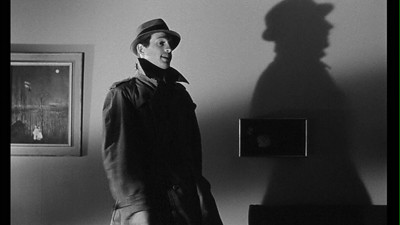
The film essentially covers a group of gangsters and 3 individual jobs they perform which are all interweaved (a jewel theft, a murder and a robbery). They get in increasing levels of trouble because within the group is a police informant, a snitch. What then follows is a quite painful hour and a bit of watching the main character, Faugel (who will never be as cool as the protagonists of Melville's later work Le Cercle Rouge), get further and further into trouble and getting more and more pissed off with the informant.
We are introduced to his crew and they're all a bit dodgy. Silien has repeated dealings with the police and is painted to be a completely cruel and immoral piece of work whilst Jean just comes off as a bit of an idiot, asking too many questions and having an annoying smug face. Either of them could be the informer but the film definitely wants you to think it is Silien, as he is continually showcased in scenes where he appears like a horrific bastard.
His finest moment being where he ties Faugel's girlfriend Therese to a radiator (I know I've said this before but 60's french chic is an EXCELLENT look for a lady), ties a belt around her neck, gags her and punches her in the face. What a superb bit of villainy. He is just so boo hissable and one of the few things in the beginning of the film that pep up the action.
You see, for most of this film I found it quite dull.
The set up is less interesting than the one other film I've seen by Melville, it seems to be solely based around Faugel planning a crime, failing and getting arrested. Throughout this period Silien wonders around asking questions.
Sure the way Silien asks questions changes - sometimes he is talking to the police, sometimes to barmen, sometimes he is beating Therese up as she is tied to radiators and sometimes he has sex with influential exes. However despite the range of methods, it doesn't mask that all he is doing is wandering around and asking questions. It doesn't make the film that exciting. However, thankfully all of that changes in the final act.
I would never claim to be an expect on Jean-Pierre Melville. I've only seen two of his films but I've started to see patterns. There are small patterns: the love of trenchcoats or the fact that the police stop running, take slow and very precise aim and shoot the fleeing perp. However both films have had a final act in which all the plot strands come together and everything twists and turns into a big messy final scene which is usually a Mexican Stand off. It is the kind of directorial decision that is also seen in other, more modern, gangster films. The works of Tarantino and Guy Richie spring to mind.
Once you've found out why Silien has been asking all those questions... everything becomes a bit more interesting.
The final act really ratchets up the excitement and the tension as we get loads of twists (which I won't reveal, after getting in trouble for Electra Glide in Blue), confusion, mixed signals, shoot outs, death, car chases and TWO 2CVs. I mean... you can't get much better than that, surely.
The film's ending also paints everything that has happened before in a different light and suddenly it isn't quite so boring. It is just a shame that the build up to that point feels so uninspired.
Showing posts with label Jean Pierre. Show all posts
Showing posts with label Jean Pierre. Show all posts
Saturday, 19 December 2009




Monday, 7 December 2009
All men are guilty. They're born innocent, but it doesn't last
No 298 - Le Cercle Rouge
Director - Jean-Pierre Melville
So, I've not posted for a little bit but I have a triple whammy of film posts to put up. Firstly a film I had tried to watch but had had to bail due to a chronic hangover. This was days, if not weeks, ago. I was then under the foolish belief that I wouldn't enjoy it.
I was wrong.
I don't enjoy HANGOVERS.
The film follows two criminals and begins by explaining how they meet up and subsequently join forces for a massive jewelry heist.
The first is Corey, fresh out of jail and hustled straight into a job by a corrupt cop. He is sort of the goody I guess. He is however incredibly cool. A very quiet and calculating figure. He seems meticulous with every movement he makes. And he has the most amazing late 60's moustache. Genuinely awesome.
I like Corey. He definitely comes out of his as the most impressive figure. He proves you can wear a mac without looking like a creepy paedophile. Something is never achieved in Highlander.
Corey is then joined by Vogel through a series of hi jinks and shenanigans (hiding in cars, shooting people etc). Now Vogel is set up to look pretty damned cool too. After all he manages to escape from a moving train. Where he has been handcuffed. In a guarded room. Using only a safety pin. However he seems to frantic, too nervous, too sweaty to be really cool.
He is not as cool as Corey. Man is one collected mother!
The two join forces with a third crack shot alcoholic ex cop in order to rob a jewelry store of 20 million francs worth of diamonds. 20 million francs may not sound like much, but remember this is 1970. A time where everybody smokes, constantly. A time when people can wear moustaches without it being ironic, or for charity. A time where back projection is ruddy awful - seriously all the clips of people allegedly driving are AWFUL. In this video, not only do you get a great example of bad fake driving, but you also see just how scary the Studio Canal title music is.
So we're introduced to our two main characters and then we have the police who are chasing Vogel. It all becomes clear (as is strongly hinted at in the scrolling text at the start) that these people will meet up. What I was surprised about was the way that it all happens.
We have a film which has clearly influenced Tarantino. The story's Mexican stand off and subsequent finale couldn't be more Tarantino and it works really well. It shows that all men are guilty and no one can avoid it.
Unlike Tarantino however, this film actively seems to avoid violence. The cool comes from the characters doing nothing. Cool, calm and collected. Any moments of violence are small gun scuffles lasting seconds and ending with a neat corpse killed by a single bullet.
They don't make violence cool. They show it as a means to an end. That makes this film very interesting and very brave.
However, nothing is as brave or as interesting as the heist. For some reason I found myself comparing the heist to Ocean's 11. It shows how cinema has changed. For at least half an hour we have next to no sound. Certainly no incidental music and no dialogue. We have no frantic edits or strange camera angles. We have no fast movements.
Just three masked men moving very slowly round carefully calculated routes in order to rob their jewels.
It is incredible. A strangely hypnotic cinematic moment. Considering so little happens, it is amazing how much it sucks you in.
Like most French cinema of that era it is effortlessly cool...
Director - Jean-Pierre Melville
So, I've not posted for a little bit but I have a triple whammy of film posts to put up. Firstly a film I had tried to watch but had had to bail due to a chronic hangover. This was days, if not weeks, ago. I was then under the foolish belief that I wouldn't enjoy it.
I was wrong.
I don't enjoy HANGOVERS.
The film follows two criminals and begins by explaining how they meet up and subsequently join forces for a massive jewelry heist.
The first is Corey, fresh out of jail and hustled straight into a job by a corrupt cop. He is sort of the goody I guess. He is however incredibly cool. A very quiet and calculating figure. He seems meticulous with every movement he makes. And he has the most amazing late 60's moustache. Genuinely awesome.

I like Corey. He definitely comes out of his as the most impressive figure. He proves you can wear a mac without looking like a creepy paedophile. Something is never achieved in Highlander.
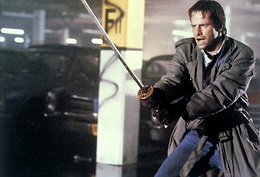
Corey is then joined by Vogel through a series of hi jinks and shenanigans (hiding in cars, shooting people etc). Now Vogel is set up to look pretty damned cool too. After all he manages to escape from a moving train. Where he has been handcuffed. In a guarded room. Using only a safety pin. However he seems to frantic, too nervous, too sweaty to be really cool.

He is not as cool as Corey. Man is one collected mother!
The two join forces with a third crack shot alcoholic ex cop in order to rob a jewelry store of 20 million francs worth of diamonds. 20 million francs may not sound like much, but remember this is 1970. A time where everybody smokes, constantly. A time when people can wear moustaches without it being ironic, or for charity. A time where back projection is ruddy awful - seriously all the clips of people allegedly driving are AWFUL. In this video, not only do you get a great example of bad fake driving, but you also see just how scary the Studio Canal title music is.
So we're introduced to our two main characters and then we have the police who are chasing Vogel. It all becomes clear (as is strongly hinted at in the scrolling text at the start) that these people will meet up. What I was surprised about was the way that it all happens.
We have a film which has clearly influenced Tarantino. The story's Mexican stand off and subsequent finale couldn't be more Tarantino and it works really well. It shows that all men are guilty and no one can avoid it.
Unlike Tarantino however, this film actively seems to avoid violence. The cool comes from the characters doing nothing. Cool, calm and collected. Any moments of violence are small gun scuffles lasting seconds and ending with a neat corpse killed by a single bullet.
They don't make violence cool. They show it as a means to an end. That makes this film very interesting and very brave.
However, nothing is as brave or as interesting as the heist. For some reason I found myself comparing the heist to Ocean's 11. It shows how cinema has changed. For at least half an hour we have next to no sound. Certainly no incidental music and no dialogue. We have no frantic edits or strange camera angles. We have no fast movements.
Just three masked men moving very slowly round carefully calculated routes in order to rob their jewels.
It is incredible. A strangely hypnotic cinematic moment. Considering so little happens, it is amazing how much it sucks you in.
Like most French cinema of that era it is effortlessly cool...
Saturday, 29 August 2009
It's called a reality check. The last thing Amélie wants
No 196 - Amelie
Director - Jean-Pierre Jeunet
I have just been to France for a week. Which was lovely. Wherein I decided, rather than sitting indoors with a DVD player I should go to the pool. Reintroduce my self to Ping Pong. Sip fine red wines as I read American Gods. Visit Cognac and stare in disbelief at 200 year old bottles of booze which cost upwards of £1,500.
So I did all these things and I returned to England. I sit in my Putney home feeling fully Francophillic with nothing worth drinking but a bottle of White wine. Therefore it seemed a butch and manly evening of plonk and Amelie was in order. Or to give it its full name (which is never used for some reason) The Fabulous Destiny of Amelie Poulain. Or... to give it its actual proper and real name Le fabuleux Destin d'Amélie Poulain.
Before I start talking about the film, I want to mention the oddness of the stock from which it emerged. By which I don't mean I'm going to get hideously geeky about negatives, but in fact mean I want to talk about Jean-Paul Jeunet. If you haven't seen any of his earlier films, go an check them out. Specifically Delicatessen and City of Lost Children. They are wonderfully twisted films showing a vivid and somewhat bonkers dystopian future. It is probably for the best if you ignore his first English Speaking film....
The easiest way to Anglify the strangeness is if you think of Terry Gilliam making Brazil and 12 Monkeys and then deciding he wants to adapt the visual style of Wes Anderson in order to make a pretty, fluffy and utterly twee romantic comedy (in fact - watch Wes Anderson's prelude to Darjeeling Limited, Hotel Chevalier (part 1 and part 2 for your delectation) and see how much it feels like a sad Amelie).
It is a strange concept, and it is done with a stunning level of prowess.
A lot of this comes from the sheer amazingness of Audrey Tautou's performance. This was her 'break out role' and it rocketed her into the public eye. Justifiably so. For she is amazing. Throughout almost all of the film, the camera locks on to Amelie. She is more than just the titular character, she is the very heart and soul of the film, the literal centre of the film (it is rare for there to be a scene in which she isn't the central focal point).
Amelie carries the whole film and it is important that the audience like her and want her to succeed. I have heard that there are people who don't like the film Amelie (too cutesy, too twee, to unrealistic) however I defy anyone not to fall a little bit in love with the character of Amelie. Audrey Tautou plays her with a delicate undercurrent of fragility which sits along perfectly with a cheeky vixen side. The two sides interplay beautifully with each other, Amelie occasionally doing something to remind you that she isn't as naive as she may seem (see her set up the illicit sex scene in the toilets of the cafe, or her amused yet bored face during intercourse).
However more important than her innocence, more important than her naughty side is the fact that Amelie is a hopeless romantic. Her every action has an elegant beauty to it, she is trying to make the world a better place. It is daring and bold yet idealist and elegant. She is the epitome of a romantic figure. By which I don't mean Love in the conventional sense, though her actions are guided by a love of people, a love of the moment, a love of joy.
Amelie's personality is stunning and is brought out in the nuances of Tautou's face, flitting from wide eyed innocence to cheeky smile in a moment. Audrey Tautou is just beautiful in this film, she is shot in a way that seems as if Amelie radiates light and warmth. Amelie is supposed to be a person people want to be near to, and in this film Tautou has the right level of approachable stunningness to fit the role. It is very different to her most recent film. As Coco Chanel, she is still stunning (Audrey Tautou is a beautiful beautiful person) but doesn't feel a fraction as approachable as Amelie.
It is not just Amelie who has this approachable beauty, the whole of Paris seems to be tarred with the same overtly romantic rose-tinted brush. This is a world in which there is no litter in Paris, neither is there graffiti. In which the homeless don't accept change on a Sunday because they don't work on the Lord's day. In which the owners of sex shops pray to saints in order to find the colleague's missing bag.
There is no seedy underbelly to Paris in Amelie. It is a happy, trusting place. It is odd to think that this was a major point of contention for some people. The lack of realism in the film proving enough for people to snub the film. Yet this is clearly a fantasy. It presents adult sensibilities (like death, jealousy, sex) in a childish innocent way, it celebrates love at first sight, it advocates the existence of ghosts. This film is a fairytale and the last thing I want is for my fairy tales to be like La Haine or *shudder* Irreversible.
All of this risks to make a very saccharine film, however it is all delivered with an oddly dry and dark sense of humour. Most of this is delivered by the excellent narration of André Dussollier. I have a love hate relationship with narration, most of the time I think it is a bit lazy, a cop out way of telling part of the story which should be conveyed through ACTING. However, when done well it is a brilliant tool.
Here it is done well, telling the full depth of Amelie's story - from the tragically comic back story (Amelie's mother being killed by a suicidal Quebecois jumping off a church and landing on her) to the little intricacies which help build up the audience's connection to Amelie's world (each character is introduced with a cutaway explaining their secret likes and dislikes).
The voice over helps to create this fairytale version of Paris and... like all true fairytales, at the heart of this story is a romance.
Amelie falls instantly with a man who collects discarded passport photos (Nino). It is here we see a new side to Amelie. For whilst she spends the majority of the film doing good things unto others, she can't seem to bring herself to give herself what she wants. Her plot to meet and woo Amelie becomes more and more convoluted, she introduces more and more steps into the process so that whenever you think the two are finally going to get together, she adds a new obstacle.
This is something that she is aware of. She speaks to people about it. Her every conversation with the Glass Man are about this very fact (although hidden by a medium of talking about a figure in the Renoir painting the Glass Man obsesses over). It isn't until the Glass Man goes out of his way to push Amelie into action that we finally get Amelie and Nino together rather than separated by the obstacles which Amelie deliberately creates for herself.
I'm so happy when the two characters finally got together. Partly because every single strand of the film (and there are many) is there to build up the characters. For most of the film you just want Amelie to be happy, but Nino's plot lines (the ghost in the passport photo machine) are so impressive that they build layers of depth into him. As Amelie gets more and more curious, so does the viewer.
So it is so rewarding to see them get together, it is also rewarding because Nino isn't the most attractive man in the world and Audrey Tautou is very pretty.
That ending relates to me.
It fills me with hope.
Director - Jean-Pierre Jeunet
I have just been to France for a week. Which was lovely. Wherein I decided, rather than sitting indoors with a DVD player I should go to the pool. Reintroduce my self to Ping Pong. Sip fine red wines as I read American Gods. Visit Cognac and stare in disbelief at 200 year old bottles of booze which cost upwards of £1,500.
So I did all these things and I returned to England. I sit in my Putney home feeling fully Francophillic with nothing worth drinking but a bottle of White wine. Therefore it seemed a butch and manly evening of plonk and Amelie was in order. Or to give it its full name (which is never used for some reason) The Fabulous Destiny of Amelie Poulain. Or... to give it its actual proper and real name Le fabuleux Destin d'Amélie Poulain.
Before I start talking about the film, I want to mention the oddness of the stock from which it emerged. By which I don't mean I'm going to get hideously geeky about negatives, but in fact mean I want to talk about Jean-Paul Jeunet. If you haven't seen any of his earlier films, go an check them out. Specifically Delicatessen and City of Lost Children. They are wonderfully twisted films showing a vivid and somewhat bonkers dystopian future. It is probably for the best if you ignore his first English Speaking film....


The easiest way to Anglify the strangeness is if you think of Terry Gilliam making Brazil and 12 Monkeys and then deciding he wants to adapt the visual style of Wes Anderson in order to make a pretty, fluffy and utterly twee romantic comedy (in fact - watch Wes Anderson's prelude to Darjeeling Limited, Hotel Chevalier (part 1 and part 2 for your delectation) and see how much it feels like a sad Amelie).


It is a strange concept, and it is done with a stunning level of prowess.
A lot of this comes from the sheer amazingness of Audrey Tautou's performance. This was her 'break out role' and it rocketed her into the public eye. Justifiably so. For she is amazing. Throughout almost all of the film, the camera locks on to Amelie. She is more than just the titular character, she is the very heart and soul of the film, the literal centre of the film (it is rare for there to be a scene in which she isn't the central focal point).
Amelie carries the whole film and it is important that the audience like her and want her to succeed. I have heard that there are people who don't like the film Amelie (too cutesy, too twee, to unrealistic) however I defy anyone not to fall a little bit in love with the character of Amelie. Audrey Tautou plays her with a delicate undercurrent of fragility which sits along perfectly with a cheeky vixen side. The two sides interplay beautifully with each other, Amelie occasionally doing something to remind you that she isn't as naive as she may seem (see her set up the illicit sex scene in the toilets of the cafe, or her amused yet bored face during intercourse).
However more important than her innocence, more important than her naughty side is the fact that Amelie is a hopeless romantic. Her every action has an elegant beauty to it, she is trying to make the world a better place. It is daring and bold yet idealist and elegant. She is the epitome of a romantic figure. By which I don't mean Love in the conventional sense, though her actions are guided by a love of people, a love of the moment, a love of joy.
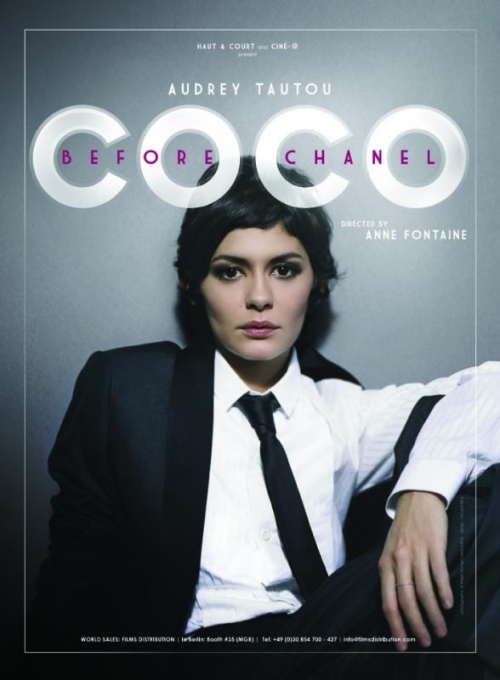
Amelie's personality is stunning and is brought out in the nuances of Tautou's face, flitting from wide eyed innocence to cheeky smile in a moment. Audrey Tautou is just beautiful in this film, she is shot in a way that seems as if Amelie radiates light and warmth. Amelie is supposed to be a person people want to be near to, and in this film Tautou has the right level of approachable stunningness to fit the role. It is very different to her most recent film. As Coco Chanel, she is still stunning (Audrey Tautou is a beautiful beautiful person) but doesn't feel a fraction as approachable as Amelie.

It is not just Amelie who has this approachable beauty, the whole of Paris seems to be tarred with the same overtly romantic rose-tinted brush. This is a world in which there is no litter in Paris, neither is there graffiti. In which the homeless don't accept change on a Sunday because they don't work on the Lord's day. In which the owners of sex shops pray to saints in order to find the colleague's missing bag.
There is no seedy underbelly to Paris in Amelie. It is a happy, trusting place. It is odd to think that this was a major point of contention for some people. The lack of realism in the film proving enough for people to snub the film. Yet this is clearly a fantasy. It presents adult sensibilities (like death, jealousy, sex) in a childish innocent way, it celebrates love at first sight, it advocates the existence of ghosts. This film is a fairytale and the last thing I want is for my fairy tales to be like La Haine or *shudder* Irreversible.


All of this risks to make a very saccharine film, however it is all delivered with an oddly dry and dark sense of humour. Most of this is delivered by the excellent narration of André Dussollier. I have a love hate relationship with narration, most of the time I think it is a bit lazy, a cop out way of telling part of the story which should be conveyed through ACTING. However, when done well it is a brilliant tool.

Here it is done well, telling the full depth of Amelie's story - from the tragically comic back story (Amelie's mother being killed by a suicidal Quebecois jumping off a church and landing on her) to the little intricacies which help build up the audience's connection to Amelie's world (each character is introduced with a cutaway explaining their secret likes and dislikes).
The voice over helps to create this fairytale version of Paris and... like all true fairytales, at the heart of this story is a romance.
Amelie falls instantly with a man who collects discarded passport photos (Nino). It is here we see a new side to Amelie. For whilst she spends the majority of the film doing good things unto others, she can't seem to bring herself to give herself what she wants. Her plot to meet and woo Amelie becomes more and more convoluted, she introduces more and more steps into the process so that whenever you think the two are finally going to get together, she adds a new obstacle.

This is something that she is aware of. She speaks to people about it. Her every conversation with the Glass Man are about this very fact (although hidden by a medium of talking about a figure in the Renoir painting the Glass Man obsesses over). It isn't until the Glass Man goes out of his way to push Amelie into action that we finally get Amelie and Nino together rather than separated by the obstacles which Amelie deliberately creates for herself.
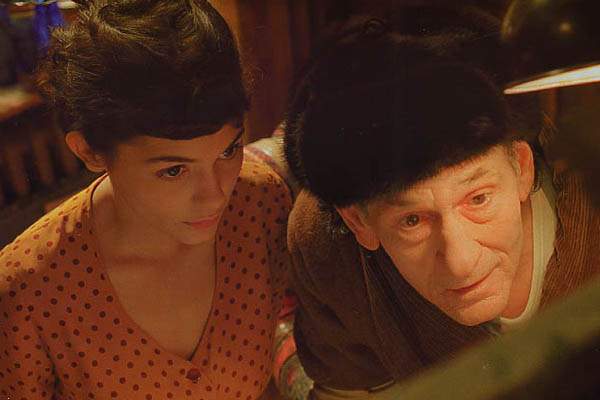


I'm so happy when the two characters finally got together. Partly because every single strand of the film (and there are many) is there to build up the characters. For most of the film you just want Amelie to be happy, but Nino's plot lines (the ghost in the passport photo machine) are so impressive that they build layers of depth into him. As Amelie gets more and more curious, so does the viewer.
So it is so rewarding to see them get together, it is also rewarding because Nino isn't the most attractive man in the world and Audrey Tautou is very pretty.
That ending relates to me.
It fills me with hope.
Subscribe to:
Posts (Atom)