No 236 - Black Narcissus
Directors - Michael Powell & Emeric Pressburger
It is a landmark moment in my history of blogging. For with this film, I approached the world of Blue-Ray. Which felt rather redundant.
I should be watching my first Blue-Ray experience on a CGI-tastic, hi def, special effects bonanza. Or something crisp and Pixar. Not a 1947 intimate film about Nuns in the Himalayas!
What the Blue Ray does help with is the sheer glorious crispness of Technicolour. Something I have mentioned over and over again in my list of filmic loves. The vistas across India and the Himalayas are just stunning and the imagery is beautiful. It is just a shame that the film feels somewhat stilted for the first hour.
Now, I love Powell and Pressburger, ranking A Matter of Life and Death as one of my favourite ever films. However, the first hour of Black Narcissus is mundane to such a level that Mr Biddle fell asleep! Saying that though, the ending is so excellent (and will be discussed later) that it makes the film worth watching again to see the small elements fit into play.
The reason is that the first hour is a slow burn looking at how a remote location can chip away at a person's resolve. It is all about the characters slowly losing their grip on reality and become more irritable, more passionate and just a little bit unhinged. This is all exacerbated by the arrival of Mr Dean who is to be their aide should the nuns need any help.
He swans around being all awesome and wearing the shortest shorts ever known to man. No wonder the poor nuns find their passions inflamed by this pipe smoking scamp.
Gradually we see the nuns get sucked into their environments. It is odd for nuns (a solitary breed) to feel the oppression of remote loneliness, but they do and as the viewer we get to see them break down as they remember the things that happened to them before they joined the order.
They are affected by the climate, the thin air and the constant stream of locals. The world is too different from their own and slowly they start to react and their resolves weaken.
There is one character in this film who epitomises this slow breakdown. Sister Ruth played amazingly by Kathleen Byron. Sister Ruth is not only integral to the film's end but she is without doubt the most fascinating and amazing character in the film.
The clues to the film's resolution are subtly sown from the start of the film. Whilst the other nuns are volunteered into the new convent for their skills (in a scene which reminds Elliot of Krull, taking nuns with particular powers which will be useful in the film) she is taken because she is unwell and the fresh mountain air will do her good.
From the moment we see Sister Ruth we see that she is reluctant to be there, she assists the teacher because she has no set role and feels redundant. And then we have the arrival of Mr Dean.
The film shares an very stinted awkward borderline flirting between Mr Dean and the Sister Superior, Sister Clodagh. However, it is when Sister Ruth first sees Mr Dean's bare chest that raw, aggressive lust comes into play.
Gradually she obsesses over him. Her jealousy on the (really weak) banter between Sister Clodagh and her jealousy over the other nuns who have found their place only make her obsession worse.
Byron's physical change is what I find the most amazing. Gradually she loses her restraint, he posture. Her mannerisms and her face become wilder, more untamed. It is a fantastically subtle fall from grace and an amazing bit of acting at depicting the tumble from reserved nun into all out scary eyed madness.
After the slow burn of the first hour, the final 40 minutes are like a slap in the face. A shocking wake up call to all who watching this lovely little drama and the closest to a horror movie I have seen from Powell and Pressburger. As Sister Ruth prowls the convent desperate to get her revenge, the final confrontation and the final showcase of her insanity is really shocking and genuinely terrifying.
And the strength of the 40 minutes completely re-invigorates my view of the whole film, allowing the first hour to be a slow build up of subtle events which lead to this explosive, dramatic ending.
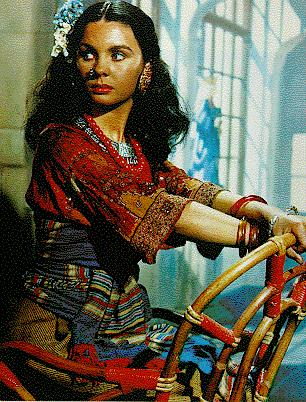
The only other real negative thing is the casual racism which sneaks its way in. I suppose it is inevitable in a film of that era, but I really don't like that fact that the character of Kanchi is a blacked up Jean Simmons!
Showing posts with label Pressberger. Show all posts
Showing posts with label Pressberger. Show all posts
Wednesday, 24 June 2009



Wednesday, 11 March 2009
You cannot have it both ways. A dancer who relies upon the doubtful comforts of human love can never be a great dancer. Never.
No 149 - The Red Shoes
Directors - Michael Powell and Emeric Pressberger
I would like to begin with a story. When I was a young boy, one of my favourite places to go was The Museum of the Moving Image (or MOMI) on South Bank. Sadly the museum got closed down... I think this is because they never seemed to update it. You got to 'present day' but found yourself stuck in the 80s. Surrounded by cybermen and spitting image.
What I loved about the place was the fact that everything was themed. So you would go through the early Victorian section through the 20s and 30s to modern day. All the staff would be in costume and in character. Best of all there was an old war era American Odeon there. It would play old films and it was there that I first saw part of The Red Shoes. It was the central ballet sequence and I remember being somewhat disturbed by it.
However, times have changed. I have matured (slightly) and am more aware of Powell and Pressberger. I remember my dad saying exceptionally good things about the film and I saw a BONKERS theatre production of it by Kneehigh Theatre. All of this made me want to watch it again.
The film is a very slow starter. It introduces the two protagonists of Julian and Vicky and slowly explains their situations, their relationships, their story. It is nice to see, quite a simple story of progression and fame told elegantly over a long period of time (nothing really happens for the first hour). It is especially nice as that isn't common place in films these days.
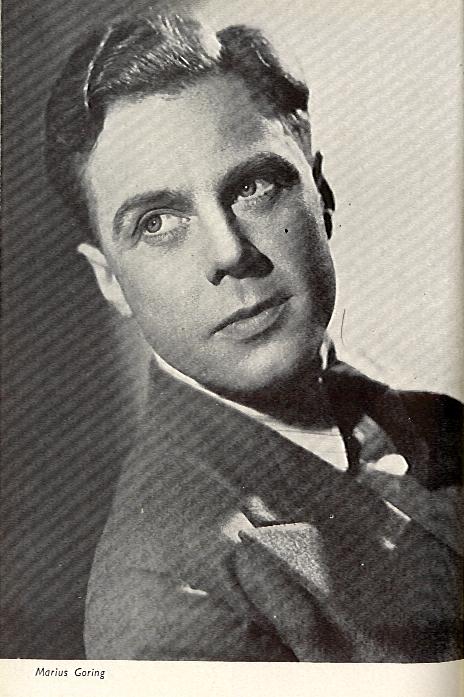
The character of Julian is cool for many reasons. Firstly, he is the French Heavenly agent from A Matter of Death. But, he is normal looking and very British. Secondly, I like him because he is so damned precocious. He is a music student and he gets hired to work for the most important ballet company in the world. He is then asked to edit and rewrite sections of a score they're going to use. What a break! Or... not. He sulks about it and then rewrites the entire score. Like I said, precocious!
In fact, all the men are terrible people. Arrogant, selfish, child like bullies. It must be hard to be poor Vicky. On one side Julian, the man she loves, demanding she gives up dancing and go with him. On the other side is the Ballet, demanding she gives up Julian. Neither side seems willing to compromise and include her needs. It is no wonder the poor girl suffers.
But then, this was a different time. A time when women clearly were expected to do as they're bally well told. And a time when ballet was the biggest most exciting thing in the world.
I don't understand quite how excited EVERYONE gets about the ballet coming to town. It must have been the cultural highlight of the 1940s....
However while the story may be nicely simple and whilst the characters may be beautiful creations (Ljubov, the choreographer is comedy gold. He was played by Leonide Massine who apparently was a wonderful choreographer in real life) the main focus of the film for me is the ballet of the Red Shoes itself.
The film transfers from a set to a sumptuous town. The colours are so rich and vibrant it is wonderful to look at. The whole ballet has a dark and ominous tone to it too - I can see why it may have concerned me when I was younger. The story gets progressively darker and progressively abstract. All the while continuing to mirror the main plot of the film.
This section also seems deeply symbolic. I don't feel intelligent enough to pretend I'd know but as a guess it must be about Vicky's desire to dance and her love for Julian.
The need for dancing pushes her and pushes her. Until she is tired, her romance is strained and ragged. And still she is pushed and pulled in all directions.
And what happens in the end?..
Directors - Michael Powell and Emeric Pressberger
I would like to begin with a story. When I was a young boy, one of my favourite places to go was The Museum of the Moving Image (or MOMI) on South Bank. Sadly the museum got closed down... I think this is because they never seemed to update it. You got to 'present day' but found yourself stuck in the 80s. Surrounded by cybermen and spitting image.
What I loved about the place was the fact that everything was themed. So you would go through the early Victorian section through the 20s and 30s to modern day. All the staff would be in costume and in character. Best of all there was an old war era American Odeon there. It would play old films and it was there that I first saw part of The Red Shoes. It was the central ballet sequence and I remember being somewhat disturbed by it.

However, times have changed. I have matured (slightly) and am more aware of Powell and Pressberger. I remember my dad saying exceptionally good things about the film and I saw a BONKERS theatre production of it by Kneehigh Theatre. All of this made me want to watch it again.
The film is a very slow starter. It introduces the two protagonists of Julian and Vicky and slowly explains their situations, their relationships, their story. It is nice to see, quite a simple story of progression and fame told elegantly over a long period of time (nothing really happens for the first hour). It is especially nice as that isn't common place in films these days.
The character of Julian is cool for many reasons. Firstly, he is the French Heavenly agent from A Matter of Death. But, he is normal looking and very British. Secondly, I like him because he is so damned precocious. He is a music student and he gets hired to work for the most important ballet company in the world. He is then asked to edit and rewrite sections of a score they're going to use. What a break! Or... not. He sulks about it and then rewrites the entire score. Like I said, precocious!
In fact, all the men are terrible people. Arrogant, selfish, child like bullies. It must be hard to be poor Vicky. On one side Julian, the man she loves, demanding she gives up dancing and go with him. On the other side is the Ballet, demanding she gives up Julian. Neither side seems willing to compromise and include her needs. It is no wonder the poor girl suffers.
But then, this was a different time. A time when women clearly were expected to do as they're bally well told. And a time when ballet was the biggest most exciting thing in the world.
I don't understand quite how excited EVERYONE gets about the ballet coming to town. It must have been the cultural highlight of the 1940s....
However while the story may be nicely simple and whilst the characters may be beautiful creations (Ljubov, the choreographer is comedy gold. He was played by Leonide Massine who apparently was a wonderful choreographer in real life) the main focus of the film for me is the ballet of the Red Shoes itself.

The film transfers from a set to a sumptuous town. The colours are so rich and vibrant it is wonderful to look at. The whole ballet has a dark and ominous tone to it too - I can see why it may have concerned me when I was younger. The story gets progressively darker and progressively abstract. All the while continuing to mirror the main plot of the film.
This section also seems deeply symbolic. I don't feel intelligent enough to pretend I'd know but as a guess it must be about Vicky's desire to dance and her love for Julian.
The need for dancing pushes her and pushes her. Until she is tired, her romance is strained and ragged. And still she is pushed and pulled in all directions.
And what happens in the end?..
Subscribe to:
Posts (Atom)