Sunday, 18 October 2009

You don't know how hard it is being a man looking at a woman looking the way you do.

No 288 - Who Framed Roger Rabbit?
Director - Robert Zemeckis


Sometimes, you rewatch films from your youth and realise that they should not be children's films. Some films are far too harrowing. Others are far too adult. I'm sure I enjoyed the cartoons in the real world or the bright colours but I don't think I appreciated Roger Rabbit till I became an adult.
This may be a PG, this may be a world populated by cartoons. But this is a genuine film noir. The only thing that isn't in this film is serious swearing or violence. But swearing and violence is there in moderation, as is sex, death, blackmail and scandal. There are also some moments of true horror.

We are in Hollywood, circa 1946. A fabulous time (made even better by all the cartoons) Eddie Valient is a private eye. He used to be a private eye for 'toons. Until a 'toon dropped a piano on his brother and killed him. He has never gotten over the death of his brother and has become an alcoholic. A shambling joke of his former greatness. Oh yes... This is not a fluffy film. This is not sugar coated.
The film then becomes a classic tale of blackmail and double crossing. All orbiting the classic cartoon staple: Acme. Marvin Acme is bumped off. Marvin Acme owns the rights to Toon Town. The film is a race to find the will.

With a surprisingly twisty complex plot in place, the film's real charm is in the effortless way that real life interacts with the cartoon characters. This is made even better with the excellent use of characters. Characters from Disney and Warner Brothers and a myriad of sources hang out and banter together. This is highlighted with the utterly bonkers game of one up manship in the 'Pen and Ink Club'.

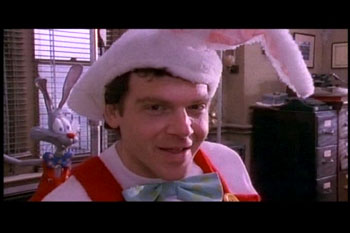
Intermingling within this smorgasbord of famous faces are the new characters. Who are almost all genius. Roger is a wonderful little bundle of emotion. He is adorable, but he pales in comparison with some of the other figures shown within the Roger Rabbit Universe (mainly because my dislike of Charles Fleischer clouds my judgement. I just find him VERY annoying). Firstly, the excellent Baby Herman - there is something distinctly 'wrong' with Baby Herman, with his 50 year old's lost and a 3 year old's pee pee. I like watching him smoke his cigars and be all misogynistic. It is funny. Whilst Baby Herman is inappropriate for a kid's film, he is not a touch on Jessica Rabbit. The impossibly proportioned femme fatale who is simply dripping in sex. Her every glance and silky step is insanely sexual. She is the ultimate cartoon fantasy. Apparently this is what she'd look like in real life. Scary and wrong. I'd prefer to assume she looks like Heidi Klum or Miss Diamond Blush. From her first sashay onto the stage with the Ki-Ora crows through to her every appearance as the red herring villainess, she is so sexual, so inappropriate. She rules.

The greatest figure though is Judge Doom. Firstly, Christopher Lloyd is a champion. I love him. He is a fabulous figure and Judge Doom is a sheer nightmare. A genuine figure of HORROR. His presence is menacing, vile and hateful, and his complete lack of 'a fair trial' is the most horrible part of the whole film.
See how we are introduced to DIP... A completely innocent character (albeit a weird squeaky shoe) is executed for no reason but to prove a point. It is chilling and menacing and so so cruel. I don't know how Doom didn't fuck up a generation of kids.
But... if Judge Doom doesn't fuck you up as Christopher Lloyd, he will as an evil evil toon. I don't think I've ever seen anything which unsettles me as much as Judge Doom being run over by a steamroller. I can't find that scene on youtube. But go hunt it out. Yes, it is obviously stop motion but it is still the most chilling and unsettling concept. Brilliant.

I like that there are these unsettlingly sexual or unsettling traumatic moments. I like that it doesn't pretend to be a kids film. This is a proper film noir. Just one with cartoons in. One of my favourite films, not just for nostalgia.

I'm also really interested in the wild speculation which is on the web with possible sequels and playing about with dimensions and perception. Very interesting.

Why should he get to do whatever he wants, whenever he wants? Why should everything work out for him? What makes him so goddamn special?

No 88 - Ferris Bueller's Day Off
Director - John Hughes

I have been proved wrong. Toy Story was not my hundredth blog. Don't Look Now was.... I have been erroneous. I apologise.
This weekend I have enjoyed the delights of the London Film Festival and have been fortunate to see three fantastic films: The Road - bleak, harrowing and full of hope. Fantastic Mr Fox - Gorgeous anarchic excellence. Cold Souls - quirky and slow burn and lovely. However none of them are on the list (though the next time they do one, The Road should be there) so I won't dwell on it.

This morning, well... this afternoon... I dragged my broken hungover body off to watch films and watched this genius snapshot of John Hughes brilliance.
This film is brilliant because of the bizarre presentation, actively breaking the fourth wall as Ferris discusses his thoughts directly to the camera. Plans on how best to skip school, his thoughts on Cameron, his best friend. His worries about new school. Rather than a narration, every seen is punctuated by Ferris talking straight to camera, or looking straight to camera. This is a film where the lead allows us to share the joke, where the lead acknowledges that we are in on it.
It also helps us to relate quickly to Ferris, who is instantly likable - though it may be early on, this is a career best performance from Matthew Broderick. Ferris is charismatic, witty, brave and impossibly cool. IMPOSSIBLY cool. Like, so cool that the film becomes a fantasy - there is no way Ferris would get away with the shit he pulls. But he does. With aplomb. It is not a serious situation. It is a fantasy and Ferris is pure wish fulfillment.
Oh, he's very popular Ed. The sportos, the motorheads, geeks, sluts, bloods, wastoids, dweebies, dickheads - they all adore him. They think he's a righteous dude.
I mean - just look at the twist and shout scene. That is fantasy. That is not real life,

Whilst Ferris is fabulous, the other cast are equally exciting. Firstly, I wish to discuss Ed, the dean of Ferris' college, played by Jeffrey Jones. I was about to say that he is another figure of excellent 80s and 90s cinema (especially playing satan in Stay Tuned) who is no longer prominent. However... IMDB informed me he is in Deadwood. Another reason to check it out.
As the principal of the school, Ed seems woefully unprofessional. Skipping school in order to spy on someone who he believes (correctly) is truanting. Rather than go through the official channels, he decides to break into Ferris' home and spy on him. Cue hundreds of hilarious hi jinks as he gets gradually more bedraggled, attacked and ridiculed.
John Hughes did not treat his teacher characters kindly.
One teacher that does get away without looking ridiculous is the Economics Teacher played by Ben Stein. I really like Ben Stein's performances in films. He is so monotone and dead pan. His constant repetition of Bueller is a tiny but hilarious scene.

The final, important character is Cameron. He is so fabulous. His transformation from uptight to relaxed and joyous to his final angry desperate breakdown. He is the pivotal character in this film. It is about the power that Ferris has over his friends - it is wonderful.
The most moving scene in the entire film is the moment where Cameron looks at "A Sunday Afternoon On The Island Of La Grande Jatte" by Georges Seurat. The editing is done so wonderfully and Alan Ruck's performance is so moving. It is lovely to watch.

This film is all about Cameron. Cameron and his father's fabulous fabulous car. It may be Ferris Bueller's day off, but it is Cameron Frye's film. He is the one who is changed. He is the one who has the experiences. He is the one who has the development. He is also the one who trashes a potentially priceless car and has the most repercussions to deal with.

Ferris doesn't change - he is just a flighty breeze. Strutting through life with a confidence and brazenness which no one else can touch.

Like I said.... Ferris Bueller is impossibly cool!

Friday, 16 October 2009

Fetch him back! Let him not go!

No 167 - Don't Look Now
Director - Nicolas Roeg

Once upon a time, in 2005, I went to Venice with my University. It is a beautiful city filled with shops full of beautiful masks. However, during our travels we went on a gondola trip. A cheap gondola trip. We learnt a valuable lesson. Don't trust a cheap gondolier. It was not long before we were completely lost and wandering the back streets of the slowly sinking city.
As we got ever lost in the twists and turns of the residential area, a small girl ran out wearing a red mac. We nearly imploded in fear. This is the lasting effect that this film has.

It is not right to call this film a horror film, though it does deal with very real horrors. There is one scene that is probably more famous (and more parodied) than any other scene, the great twist, shock revelation at the end, which is a shocking and horrific moment. However I would like you to cast it from your mind and look at the rest of the film.
Rather than jumps and scares, this is a slow, long, lingering look at oppression. It is filled with symbolism which I won't even pretend to understand and which has the bleakest final message I have seen since The Fog.

The film begins with the death of Christine Baxter as her parents sit and relax in their main room. It is here that we also see the film's sporadic editing. Spilt glasses cut to balls dropped in ponds cut to wine smudging slides cut to water over the face of a drowning child. It is all very very graceful and makes the whole drowning section feel dream like and fractured. Like distant memories of the event rather than a depiction of the event itself. It also shows some amazing grief. Donald Sutherland (who looks spectacularly 70s throughout) is near paralysed with emotion and wails and wails to the sky. It is an incredibly powerful piece of cinema.
Not content with offing one of their children in the first 10 minutes, John and Laura Baxter send their son off to boarding school and jet off to Venice.


It is whilst in Venice that the film begins to play with imagery and the concept of fate. This film is about John Baxter's inevitable march to his own destruction. What I find really disturbing is the film's introduction of the paranormal and the really strange sisters. I think a certain element of the sisters are a red herring. Notably the fact that they appear EVERYWHERE. They provide solace to Laura by talking about Christine but they are a source of annoyance to John, for whilst Laura needs to remember, John needs to work and hope to forget.

The whole film seems to be presented like thoughts. Where the initial scene was fractured and broken, the rest of the film seems very very oppressive. Almost every person met in the film is painted in a sinister light, as if they have some kind of hidden ulterior motive. When this combines with the increasing number of near death experiences, or murders which occur it helps to show the exact frame of mind John is in. Another very brave way to show this is through the medium of sex scenes. Again the editing gets to show us the true depth of the scene, as by alternating between them having sex and them getting ready, happy. It shows a frantic grab at normality, at being a couple.
And that's what is truly remarkable with this film, there are so many layers and so much hidden depth all to tell the tale of a couple trying to overcome their depth.

It is cruel that at the one point where John thinks he may have found a resolution he is destroyed. Rather than bringing hope, he has brought along his own destruction and be it a real angry dwarf, or fate, or symbolism in context within the film, the ending is still shocking.

Monday, 12 October 2009

And this is the Buzz Lightyear aisle. Back in 1995, short-sighted retailers did not order enough dolls to meet demand.

No 179 - Toy Story 2
Director - John Lassiter

Times are changing when it comes to children. Where Toy Story begins with a cardboard town and a toy western, Toy Story 2 begins in the vivid landscapes of space. A fully functioning, Jetpack flying, laser blasting, forcefield toting Buzz Lightyear adventuring their way to defeat the evil emperor Zurg. Only to be blasted to smithereens. Game Over. Welcome to the world of computer games. The geek in me is impressed that this is all played on a SNES (excellent graphics).

This film is impressive because it continues the themes of Toy Story, but inverts the story. So, where Toy Story was about fear of rejection and Buzz realising he is less than he initially thought, Toy Story 2 continues the fear of rejection but is about Woody realising he is more than he initially thought. A collectors item.
The film also continues ideas that were only slightly hinted at in the first film. Here Al's Toy Barn moves from being a fleeting advert for Buzz Lightyear, to becoming the pivotal surroundings as Woody is stolen to be part of a Woody's Round Up collection sold to a museum in Japan. This also gives us the films new characters.
The collection of Barbies add a fun slightly scary dead eyed perma-grin addition to the toy canon. But... as we all know from Small Soldiers. There is nothing scarier than living Barbie dolls.
However the real joyous new additions are the Woody's Round Up Gang of Jessie, Bullseye and Prospector Pete. They continue the franchise's theme of rejection. Pete is a bitter toy, still mint in box, he's never been played with and he believes that children just destroy toys. He tries to corrupt Woody by telling him that though Andy may care for him now but he will grow up, and Woody WILL be neglected. This is just strengthened by Jessie's story (which, I'm ashamed to say, I found the dullest part of the film in 1999 and still do, 10 years on). The idea of a child outgrowing their toys is also (I believe) the theme for the upcoming Toy Story 3.

However, what really shines about this film is just how silly it is - and it is REALLY silly. The film is self referential (a longstanding Pixar tradition) - playing with the concept of the Buzz Lightyear dolls selling out in 1995, including Geri from Geri's Game as the toy fixer and bringing back an arrogant ridiculous Buzz. This time with utility belt.
But the real thing that is odd about this film is the sheer number of movie references from outside Pixar's canon. From the first scene where musical blogs play the introductory tones of 2001. Through to Mr Potato Head using is bowler like Odd Job or Rex being used for a cheap Jurassic Park pun - the film is full of homages. However, the best one is the excellent, almost frame for frame, version of Empire Strikes Back using Utility Belt Buzz and Emperor Zurg, even down to fake James Earl Jones voices. Why is it only the Buzz Lightyear range that fail to realise they're toys?

But most ridiculous of all - is that Andi Peters has a voice cameo in it. I find it really weird, even though it is one line it always jars in the film. Find the one British voice in Toy Story 2. Andi Peters.

This is a film which covers a lot of the themes and plot points of Toy Story but expands on them further. It is about the lengths one would go for friendship. It is about overcoming the fear of being rejected and neglected. It is about co operation and loyalty.

But mostly it is about the importance of being loved.

One minute you're defending the whole galaxy, and, suddenly, you find yourself sucking down Darjeeling with... Marie Antoinette and her little sister.

No 99 - Toy Story
Director - John Lasseter

100 FILMS!!!
100 BLOGS!!!
Yes indeedy... this is my 100th film. It as taken a pitifully long time to get this far. I almost feel ashamed. But I'm trucking along at a much better pace now. We're gathering up steam and we'll hit 200 before you know it! I promise ya.

My Sunday ended up being delightfully Pixar-tinted. Starting with this, their first feature film, followed by Up - which has a delightfully poignant introductory sequence followed by 90 minutes of Looney Tunes style insanity and finally a really interesting South Bank documentary on Pixar.
Naturally - I'll be following it up today with Toy Story 2. Makes sense.

It makes me feel disgustingly old to think that Toy Story came out 14 years ago. 14 YEARS ago. That is just strange. I remember going to see it at the cinema and the excitement of seeing the Disney logo appear in glorious CGI. My how things have changed now....
All it takes is the Disney castle to show you how CGI has developed in the last 15 years, and yet Toy Story still feels surprisingly modern. Yes some parts have visually dated. Especially the organic stuff - the humans feel a bit dead eyed and vacant and Sid's dog Scud is just rubbish in comparison to the new dogs who appear in Up, however elements like the shiny plastic toys still could compete against other, non Pixar, films.

What really impresses about Toy Story though, is the story and the characterisation. Whilst the CGI may have been the initial draw (back in 1995) it is Pixar's amazing depth of character and richness of story that keeps the viewer interested. It is also the bravery of their films. Toy Story may well be a buddy movie told using toys, but it is also far more than that - it is a film about rejection and the fear of replacement. It is a film that addresses the fear of feeling inferior and helps you to tackle it. It is a very strong message told with such lovable characters, letting us see childhood favourites become smart ass shit stirrers and creating new childhood favourites.

As well as tackling rejection and the story of cooperation (after all Buzz and Woody learn to work together), Toy Story tackles some pretty dark moments.
Firstly Buzz's breakdown at the realisation that he isn't a toy. Going through moments of hysteria, despondency and finally realisation. At times it is pretty tough to watch.
The moments where Buzz realises he is a toy is the beginning of Pixar's tradition of putting immensely moving performances into their cartoons. Considering how ridiculed he is, and how odd some of his songs are, Randy Newman's work works really well in the film and this sequence is quite the tear jerker.
As are the dark moments. For Pixar don't shy away from the potentially scary (in what is, after all, a kid's film). Sid's toys are twisted bastardised mutants but are also a prime example of Disney's main message - Don't judge a book by its cover. These twisted mutants have hearts of gold - and Ducky is the most stupidly genius character in the film. Mainly because I love Pez dispensers.
However, Woody's final plan to save Buzz and stop Sid is dark. Through and through. Zombie dolls lurching out of the mud... Woody even evokes the spirit of the exorcist. The poor child will be traumatised forever.

But he is a bully - so fuck him. After all, for everybody else the film ends happily and the toys are more contented at the end of the film then they ever have been before.

Sunday, 11 October 2009

I agreed that what really matters is what you like, not what you are like... Books, records, films - these things matter.

No 446 - High Fidelity
Director - Stephen Frears

Narration is a tricky cinematic feat. It is perfectly normal for a book to be written in first person, or to be written in a style that directly targets its audience.
"You may be wondering, dear reader, why I - a humble plumber from Constantinople did blah blah blah...."
However this is a very difficult thing to convey in filmic terms. A narrator and breaking the fourth wall is a very risky move. Which can sometimes work and sometimes feel like a lazy inability to convey emotion.

Rather than a narration, we have a protagonist who is also the narrator. The riskiest of risky moves as he flips out of the film to tell the viewer something, whilst surrounded by oblivious co-stars and extras.
This film presents itself as a story of love and music, but it isn't. It is a story about lists. John Cusack's Rob has a near-autistic obsession with lists. He loves music and records, OBSESSES over music and records because it can be compartmentalised, put into lists. Top 5 side 1 track 1s, Top 10 live performances between 1969 and 1973 etc etc. This film is also about his inability to grasp relationships and romance. He represents it as this big, oppressive, confusing entity which he can't grasp - because he can't organise it.
I would not be surprised, ladies and gentleman, if Mr Rob Gordon is perhaps on the autistic spectrum.

It would also explain his store which is deliberately elitist, difficult to find and rude. The only reason people go there is it is the only place with the records they need in stock.

I find it hard to like Rob for a lot of these reasons. But mainly because he feels that he deserves better, that a better life should be handed to him. He spends 90% of the film complaining. Breaking down former situations and focusing on the negatives, bitching, moaning and being infuriatingly 'woe is me' about everything.

The film basically follows Rob after he has been dumped and he dismantles his top 5 worse break ups and revisits his exes to get closure. Slowly he starts to realise that he isn't the destructive force he feared he was. That the relationships ended naturally (or in one excellent scene, that he himself ended the relationship).
Each moment is introduced with a flashback of the relationship, and they are faultless. I don't if it is the genius of John Cusack as an actor or if it is excellent use of make up and wardrobe. But, teenage Rob and Mid 20s Rob all the way up to present day Rob. Each is a perfect and real feeling snapshot. Even the kid they get to play 14 year old Rob looks and acts like John Cusack, it is a really impressive feat.

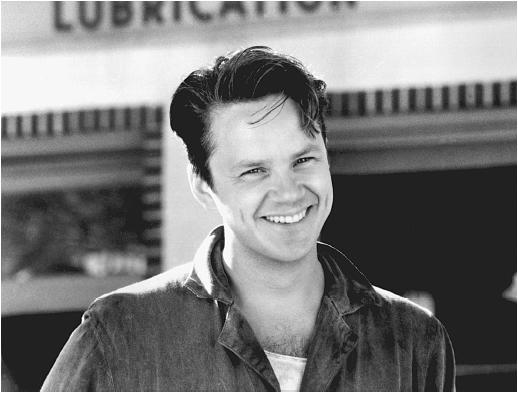
I also love that there are some really weird choices for cameos which motivate Rob on his journey. Firstly Tim Robbins as Ian, the man whom Laura (Rob's most recent ex) has left him for. Despite the cameo in Anchorman, I still see Tim Robbins as a SERIOUS ACTOR - mainly, I think, down to Shawshank Redemption. So I found it really odd to see him appearing as this middle aged business orientated - new ager full of self importance and pomposity. I went to uni in Brighton. I know the type.
His cameo also leads to one of the best scenes. Due to the fact that this film acknowledges it is a film (through John Cusack's to camera narration) it means that a singular scene of fantasy can be forgiven. When it is as brilliant as this - it is more than forgiven, it is LAUDED.

The only other flight of fantasy in the film is the excellent cameo from The Boss himself, Springsteen - who tells Rob to go on this journey of self discovery. That cameo is excellent because Springsteen is excellent. Like a Boss.

These individual reunions help him to discover something. He is still in love with his current ex and finally Rob's character begins to deepen.
He seems to spend the entire film expecting the worst. He expects the worst from his relationships so he's always on the look out for a better option (which naturally leads to his relationships failing). So the finale of the film is great because it proves him wrong on so many levels.
Firstly - he gets back together with Laura and the film's journey of reunions showed him that the 'fantasy woman' doesn't exist and that he does love Laura and he does want to be with her.

Secondly the 'no good punks' who clutter up his kids are talented musicians and people like their music. So he promotes them.

Finally (and most refreshingly, for me as a viewer) - after an entire film of mocking his colleague Barry's band. They play and they are excellent. Barry is the scene stealing dervish of arrogant chaos that is Jack Black - and Rob is convinced that his band, Sonic Death Monkey, will be awful. Laura asks them to play a gala event and Rob tries to get them to back out.

Luckily the band is fab - and Rob's reaction is the most important part of the film.

This is not a film about music. This isn't even about lists. It is about realising there is more to the world than the impossible dream and to embrace the good that surrounds you rather than focus on the flaws.

Friday, 9 October 2009

You have exactly eight hours and fifty-four minutes to think about why you're here. You may not talk, you will not move from these seats.

No 369 - The Breakfast Club
Director - John Hughes

I was going to watch this film months ago. As a fitting tribute to the late great John Hughes. However I don't own it. It arrived today and I watched straight away and I had forgotten how spot on it is.

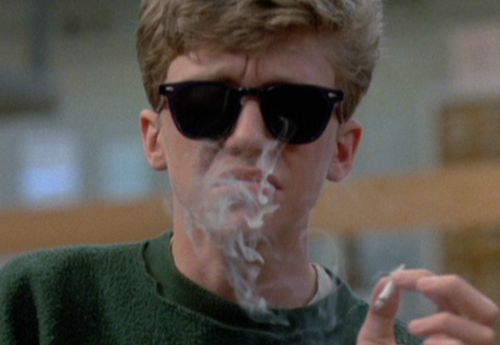
The film follows a bunch of teenagers who have been sent to detention on a Saturday and who all conveniently all into stereotypes. So we have Andy, the Jock, played by Emilio Estevez. Claire, the Prom Queen, played by Molly Ringwald. Brian, the Nerd, played by Anthony Michael Hall, John, the Criminal, played by Judd Nelson and Allison, the Basket Case, played by Ally Sheedy. Together they make up the titular Breakfast Club.
The thing is, this film embraces the stereotypes. Wants the stereotypes. It is asking you to begin the film with preconceptions about the characters, because each character has preconceptions about the others. We know that High School (American more so than British) is a very cliquey place. See exhibit one or two for further evidence. Cliques do not intermingle and therefore would not know the others in any real detail. Each person is stuck in a room with strangers and their own personal prejudices and preconceptions.

The first half of the film and the characters play up to their stereotypes. Andy is uptight and angry and aggressive. John is a destructive dick. Claire is prissy, snobbish, stuck up. Brian is trying SO hard to get along with everyone and make everyone behave whilst Allison is just weird.
Then slowly, the group bond and the film becomes so much deeper. The characters get to know each other (and get progressively stoned). They begin to enjoy each others company and begin to tell home truths. There is a sort of 'prison' essence to it all "why are you here"... after all this is detention. The confessions for what they did and why they did it are so beautiful and poignant. This film may begin as a silly school romp with stereotype characters but before long we're exploring the deepest darkest recesses of the teenage psyche. Looking into their longing for attention and the massive pressures they get from teachers, parents and their friends and social standing.

John Hughes is an amazing writer and an excellent director. To create something that is so deep from such a light and fluffy premise. During his golden period, when he was king of the 80s, he really understood the teenage mind and how to truly explore it.

Each member of the group takes a while to become accustomed to their new found social circle. By the time everyone is friends, Claire openly admits she would still ignore them at school. This is not a film where *click* everyone gets on. This is full of all the stupid little hang ups that follow teenagers. Full of arguments, shouting and tension. But resolving in an amazing friendship of 5 people.
That's what makes the film genius.

So... I've never summed up my views on a film so quickly. I'm clearly becoming a bit more concise. There are some other things I want to mention.
Firstly... there is nothing really cinematic in scope in this film. There is very little in it which isn't set in the library. This could easily be a play. Yet, despite this it remains a captivating and filmic study of character and a wonderful slice of 80s. That is down to excellent direction though.

Secondly I think Brian is easily the best character. His pathetic neediness throughout is balanced shockingly by the admission of his attempted suicide - though he accidentally buys a flare gun which goes off in his locker.... hence his detention. He spends the whole film desperate to be liked and desperate to rebel (see how quickly he runs to join the people smoking weed at the back of the room). Brian is a hen pecked nerd who finally gets the chance to live through his new friends. It is a shame he gets stuck writing an essay whilst the other 4 pair up. Poor little Brian.

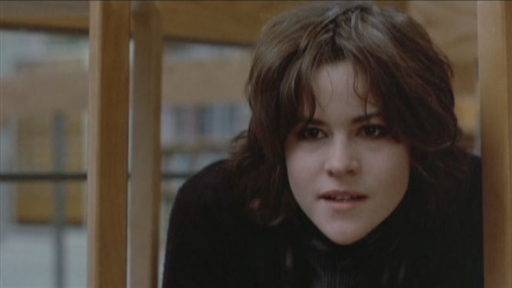
Thirdly... I know people are probably supposed to find Molly Ringwald more attractive, however... I think Ally Sheedy is really pretty in this. She looks lovely after her makeover from Claire at the film's conclusion, however she does lose some of her allure. There is something in her strangeness, her black eyeliner and scraggly clothes that just makes me fancy her quite a bit...

So there you have it... This is a film with one big message. Do not take people at face value. It doesn't try to be anything cleverer than it is, and because of that it delivers the message with elegance and dignity whilst painting the judgemental adults as complete violent pricks, and the non judgemental adults as genuinely kind. The Janitor doesn't take the kid's shit, but doesn't patronise them, whilst Mr Vernon gets angrier and angrier and more ridiculous throughout the film.

It also provides banging musical numbers. Sound quality is rubbish but you get the idea. Here is a better version of the song (only without the choreography).

Whilst I have you (my what short paragraphs I'm writing), if you haven't seen this yet, check it out. I know John Hughes died in August, but this is first of his films I've seen in the challenge and this is a stunning stunning tribute.